
Warm off the Press
Two mysteries from last year

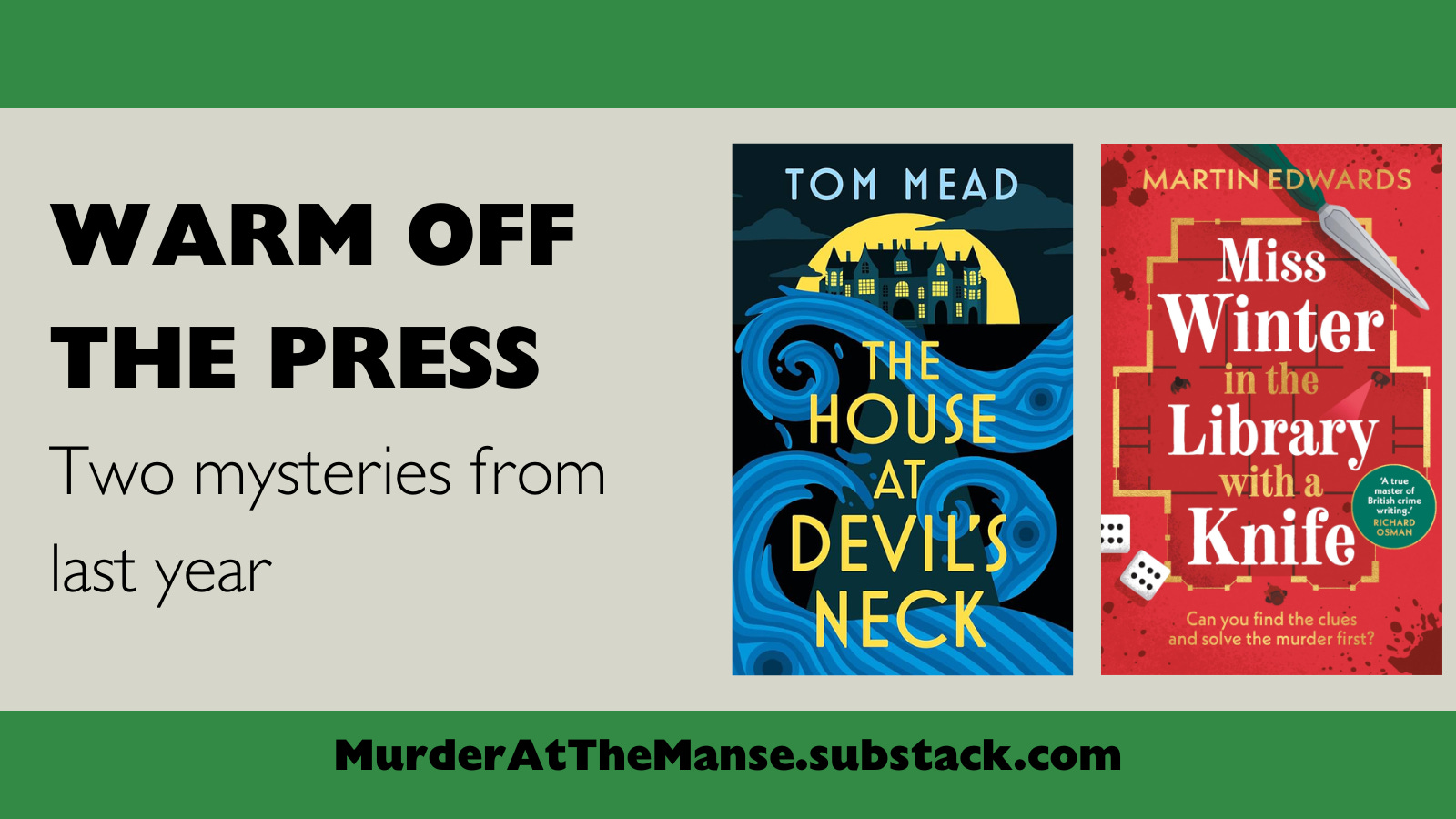
I rarely read novels hot off the press, close to publication. Most novels are stone cold by the time I get to them. But Mrs Manse gifted me some excellent new-ish reads for Christmas, which I devoured by the end of New Year's Day. The books in question were the latest novels from classic crime aficionados Tom Mead and Martin Edwards. They were both very good company for the post-Christmas lull, and I’m glad I didn’t leave either of them languishing in the TBR pile.
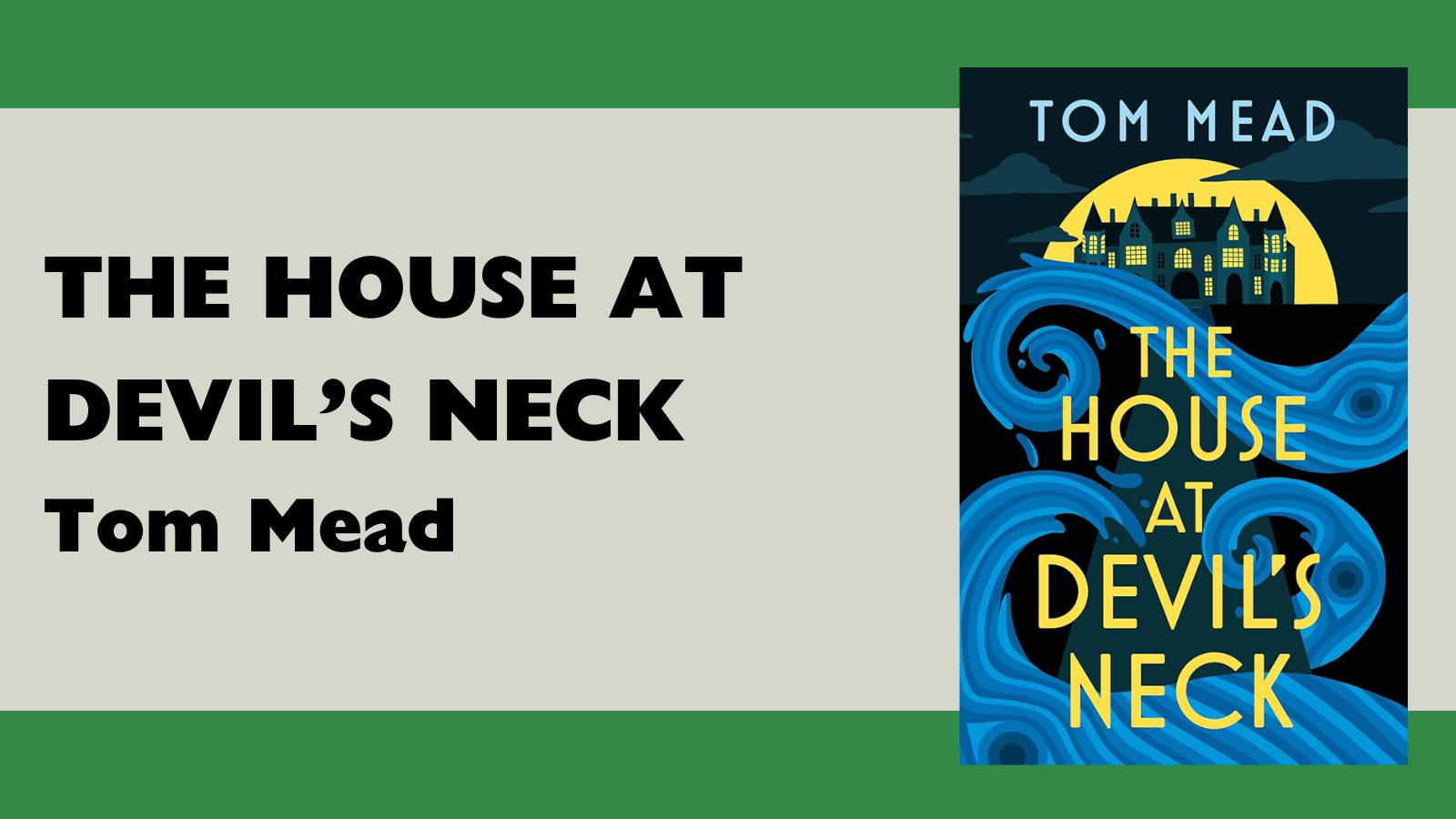
The House at Devil’s Neck is the fourth instalment in Tom Mead’s wonderful series featuring Joseph Spector, an illusionist-turned-detective who finds himself investigating locked-room murders. Mead writes in the Golden Age tradition, with an especial indebtedness to John Dickson Carr. Interestingly, my next Substack post will feature Carr’s similarly-titled The House at Satan’s Elbow.1 By that point in his career, Carr was very much past his prime, but I’m pleased to say that Tom Mead is still on top form. In fact, I enjoyed this book even more than Spector’s previous case Cabaret Macabre.
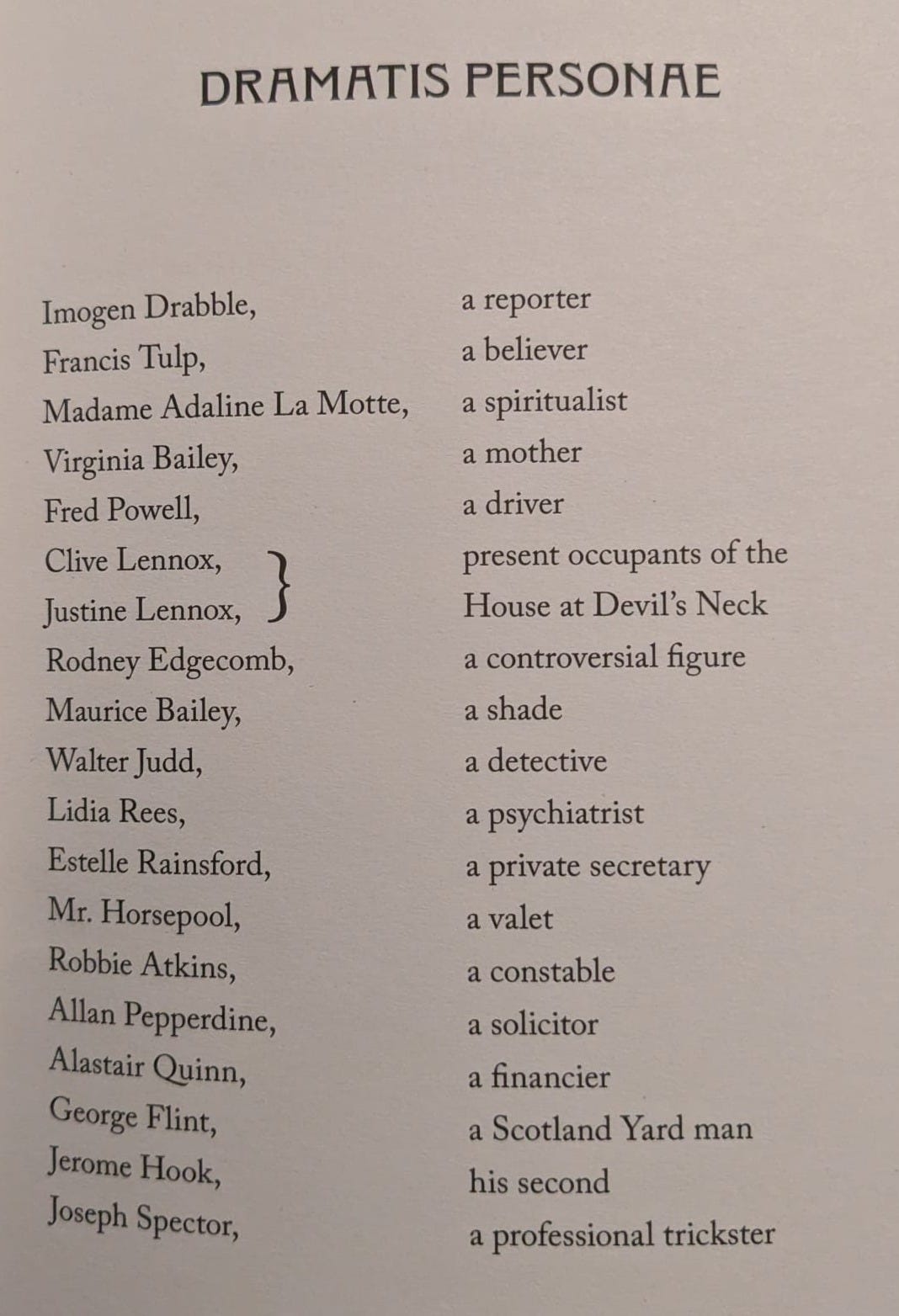
After a list of dramatis personae, the narrative begins by alternating between two scenes: a death in a locked room in London and a coach trip to Devil’s Neck.2 This sinister-sounding destination is an isolated mansion with a reputation for hauntings, and the coach is filled with a mix of individuals with an interest in its ghostly history. One of these is Joseph Spector, who is quite handy to have around when the killing starts. Meanwhile, the case in London is being investigated by the familiar Inspector Flint. Unsurprisingly, the two investigations eventually converge, and we get three locked room puzzles before Spector’s final exposition.
As you’d hope from that synopsis, this novel is very rich in atmosphere. Concerning Devil’s Neck, we’re told: “The damp and sheer misery of the place was not merely skin deep. It burrowed into the bones.”3 Against this damp backdrop, Mead treats us to a satisfying smorgasbord of spooky ingredients, including a séance, a spooky automaton and a flood that cuts off the outside world. One of the crime scenes is especially macabre, “the product of a nightmare imagination”. This is definitely not your typical coach trip — thankfully!
If you’ve already read some Tom Mead, you’ll know not to expect a straightforward puzzle. In The House at Devil’s Neck, we even find Inspector Flint “rubbing his forehead, his eyes screwed up” during Spector’s explanation, as “the confusion was just too great”. But it’s a satisfyingly intricate mystery. I was pleased with myself for spotting some key clues, but still failed to understand the significance of them. In the latter part of the book, as the mystery is explained, the author helpfully gives you footnoted page references to certain clues to highlight your abject failure in piecing the puzzle together.
As well as being a good plotter, Tom Mead is a skilful wordsmith, so you may finish this book with a few new words for your vocabulary, like susurrous, stippling and caliginous. He also provides us with a number of vintage delights, including floor plans and a challenge to the reader, where Tom Mead playfully announces: “Nowadays such practices are antiquated and rather passé. But who am I to stand in the way of a reader’s fun?” This book is definitely not passé though. It’s a brilliantly fresh contribution to the world of impossible crimes. I’m eagerly awaiting Tom Mead’s next mystery.
Verdict: ⭐⭐⭐⭐ (4/5)
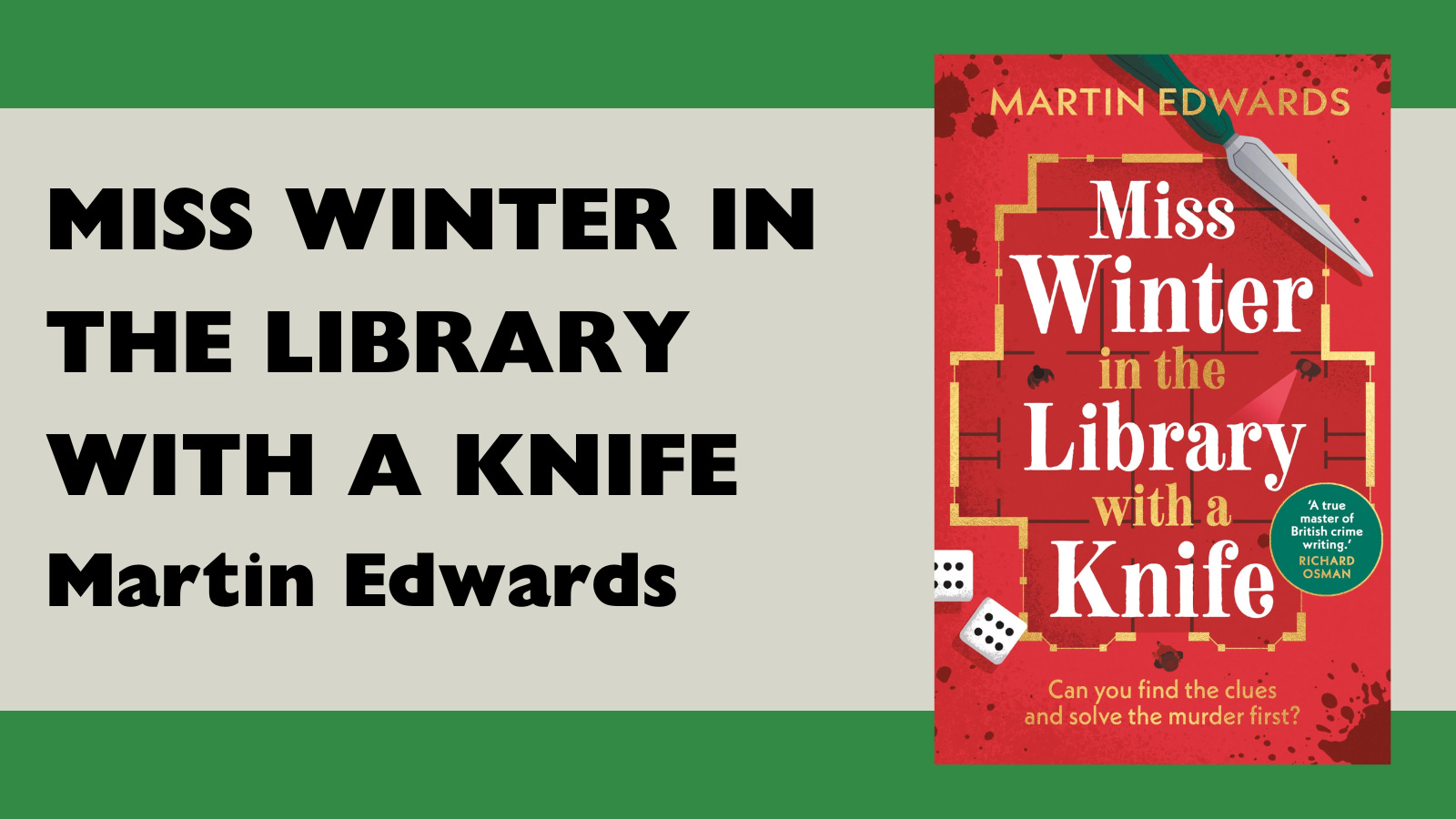
You know it’s going to be an unconventional crime novel when the first page contains a list of dramatis personae that ends with the enticing words: “And YOU?”4 Miss Winter in the Library with a Knife is definitely not a simple tale of detection. There is a classic murder story at the heart of the book, but this is just one part of a multi-layered immersive game in novel form. As well as the main puzzle, Martin Edwards gives us a puzzle within the puzzle, and it’s all set within a puzzling environment. I suppose you could say this book is a riddle wrapped in a mystery inside an enigma.
The mysterious Midwinter Trust have invited a sextet of guests to their remote headquarters in northern England to play a special murder mystery game with a life-changing prize. The competitors include a crime podcaster, a book publicist, a disgraced reviewer and a struggling novelist. And you don’t need to feel left out, because you get the clues to play along too. An additional mystery soon emerges when, in classic crime fashion, a snowstorm secludes the guests and people start getting murdered.
Theoretically, the original competition continues, but it's hard to concentrate on games when your life might be at risk and you're not sure who to trust. Throughout this, the nature and motives of the Midwinter Trust are somewhat opaque, and it becomes increasingly clear that the truth is connected to an unnamed unfortunate event that happened five years previously. “How stressful can this game really be?”, one character asks near the start. Extremely so, it turns out.
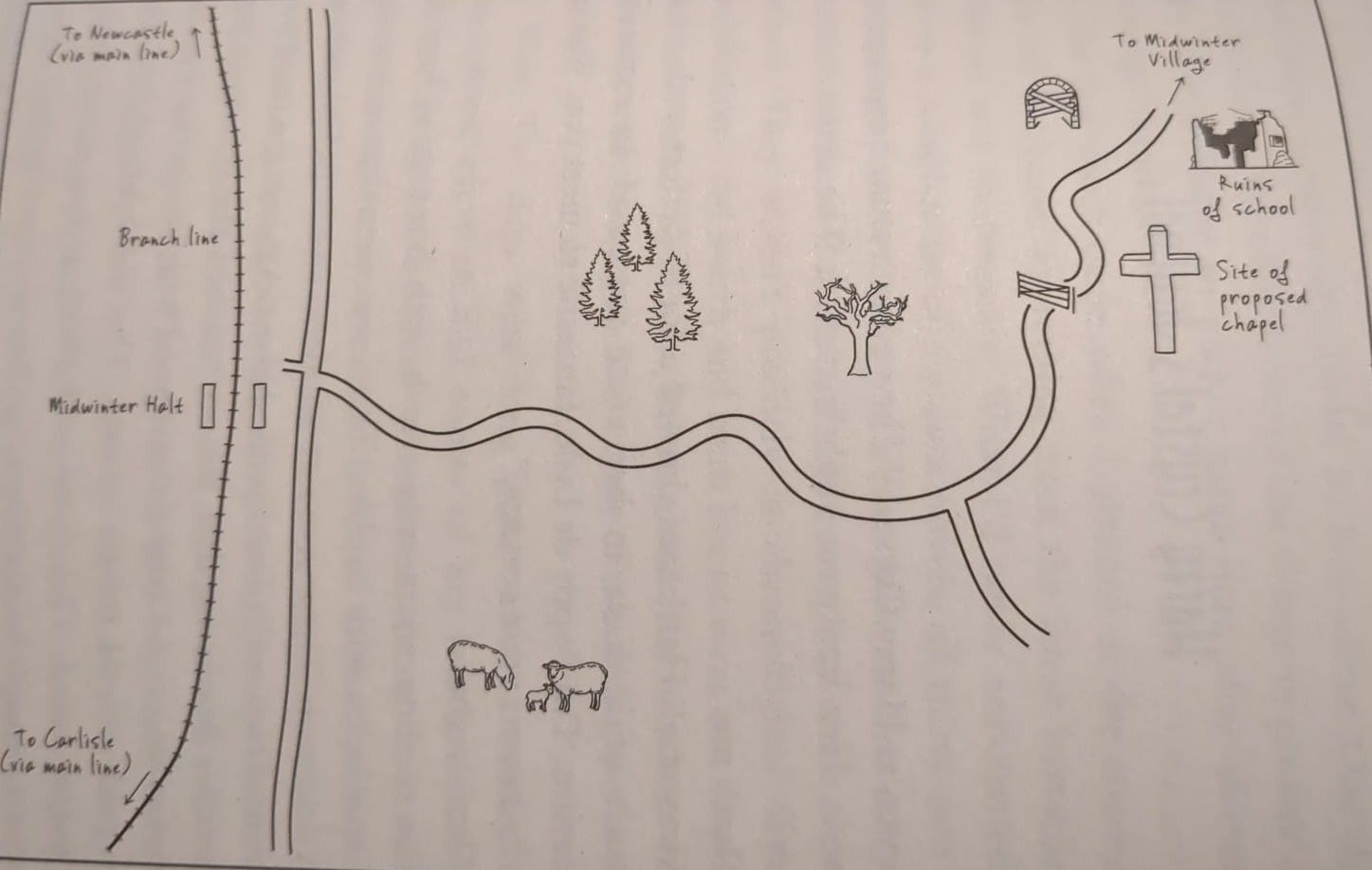
A significant amount of the mystery unfolds through the eyes of Harry the novelist, who is a very enjoyable narrative voice. Harry is an affable pedant who casts himself in the Watson role without a Sherlock. His disappointing career gives plenty of scope for publishing-related humour. I think my favourite line was his observation: “What I’d never anticipated was to see a complete set of my own novels, all thirty-two titles in hardback, neatly lined up in a row. All were first editions — admittedly, none of them had sold enough to merit a second edition.”
As well as Harry’s account, we get some journal entries by Poppy the publicist and some scenes from the perspective of the Midwinter Trust. These are interspersed by miscellaneous other documents, some relating to the mystery-within-the-mystery and others connected to the history of Midwinter. You also get a two-page introduction to the “rules of the game”, which concludes with a clarification that Martin Edwards accepts no legal liability for personal injury incurred while reading the book.5 It wasn’t always easy to follow the multiple threads, but it all added to the immersive reading experience.
Beneath these trimmings, the core of the book is a closed circle mystery written in the Golden Age tradition, which unfolds in a classically ominous-yet-festive setting. The book ends with a delightful Cluefinder, which itemises all the clues that I failed to spot. On page ix, we’re told that you need to spot 30 or more clues to rival Poirot. Suffice to say I offer no threat to the Belgian detective. The final reveal is excellent and includes a nice bit of poetic justice. For classic crime fans, there are some extra nods to the Golden Age, including Harry’s bibliography, which includes titles such as Why Didn’t They Ask Evelyn and Have His Car Crash.
It’s obvious that Martin Edwards had great fun writing this book, and I had great fun reading it. He mentions his Rachel Savernake mysteries in the Cluefinder, and I realise I’ve been very remiss in not reading any of them. I really need to change that.
Verdict: ⭐⭐⭐⭐ (4/5)
Did Santa bring you any good reads at Christmas? I’d love to hear about them! Let me know in the comments.
I assume the reference is deliberate, although I couldn’t find an explicit mention of this.
Why don’t more novels begin with a list of dramatis personae?!
Similar to the room I rented in my second year at uni.
See footnote 2 above.
Fortunately, I managed to avoid injuring myself.
Thanks very much for your nice review of Miss Winter, a book that has been very lucky for me. Much appreciated.
Absolutely adore a list of characters at the start of a book. I don't know what it is about them, but I find them delightful.