
Transatlantic Crossings
Two historical mysteries from Lovesey and Hawkins

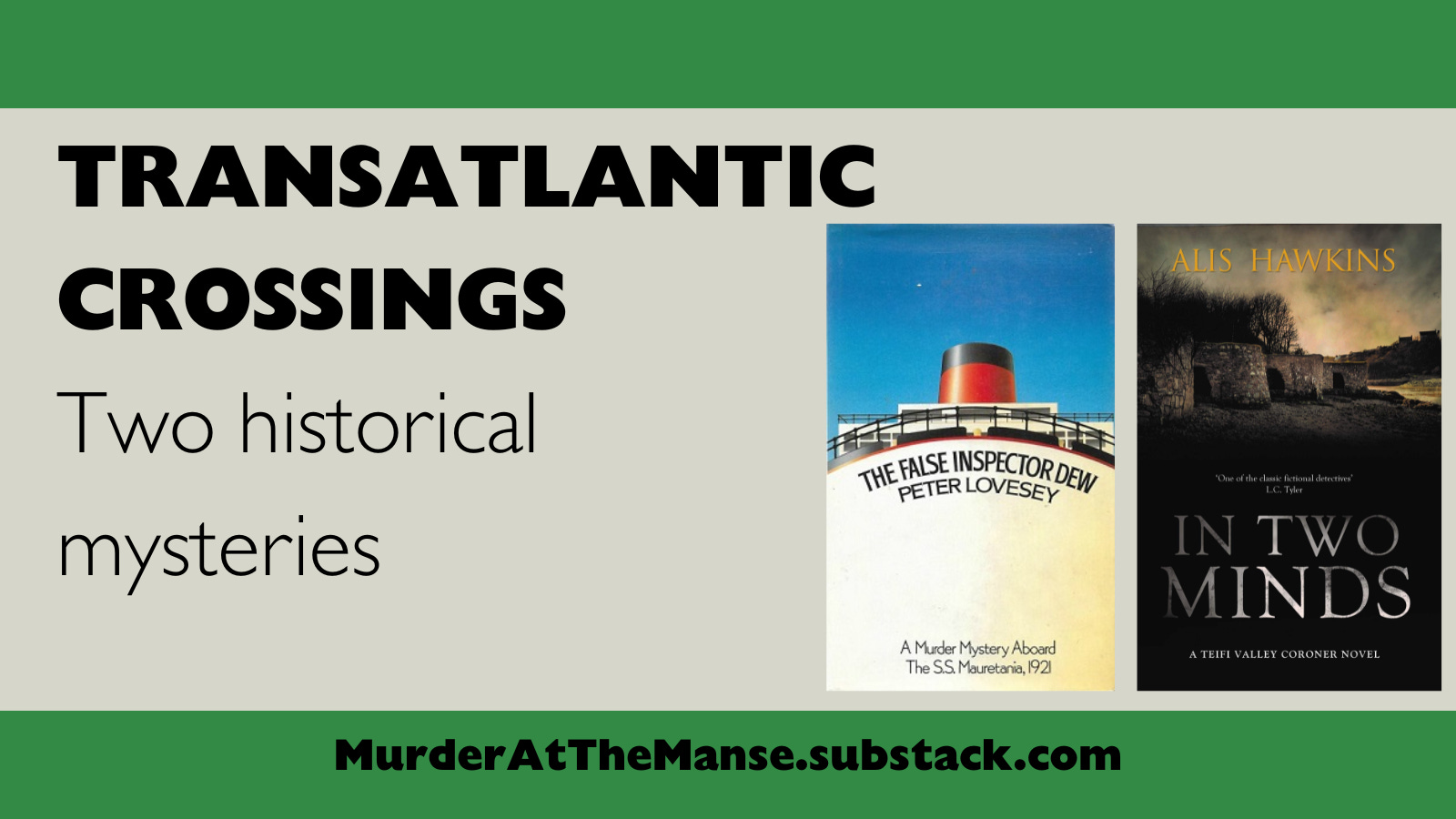
Entirely coincidentally, I recently read two very different crime novels that both involve UK-to-US transatlantic ocean crossings as a key part of the plot. As an added coincidence, they are both historical mysteries set in different periods. And a final coincidence: they were both very enjoyable.
Based on these coincidental connections, I’ve brought these two books together into one Substack post. The books in question are Peter Lovesey’s 1982 classic The False Inspector Dew and Alis Hawkins’ more recent 2019 book In Two Minds. I’m sure there are other books that would fill this niche subsubsubgenre of “historical mysteries involving transatlantic sea crossings”. Let me know in the comments!
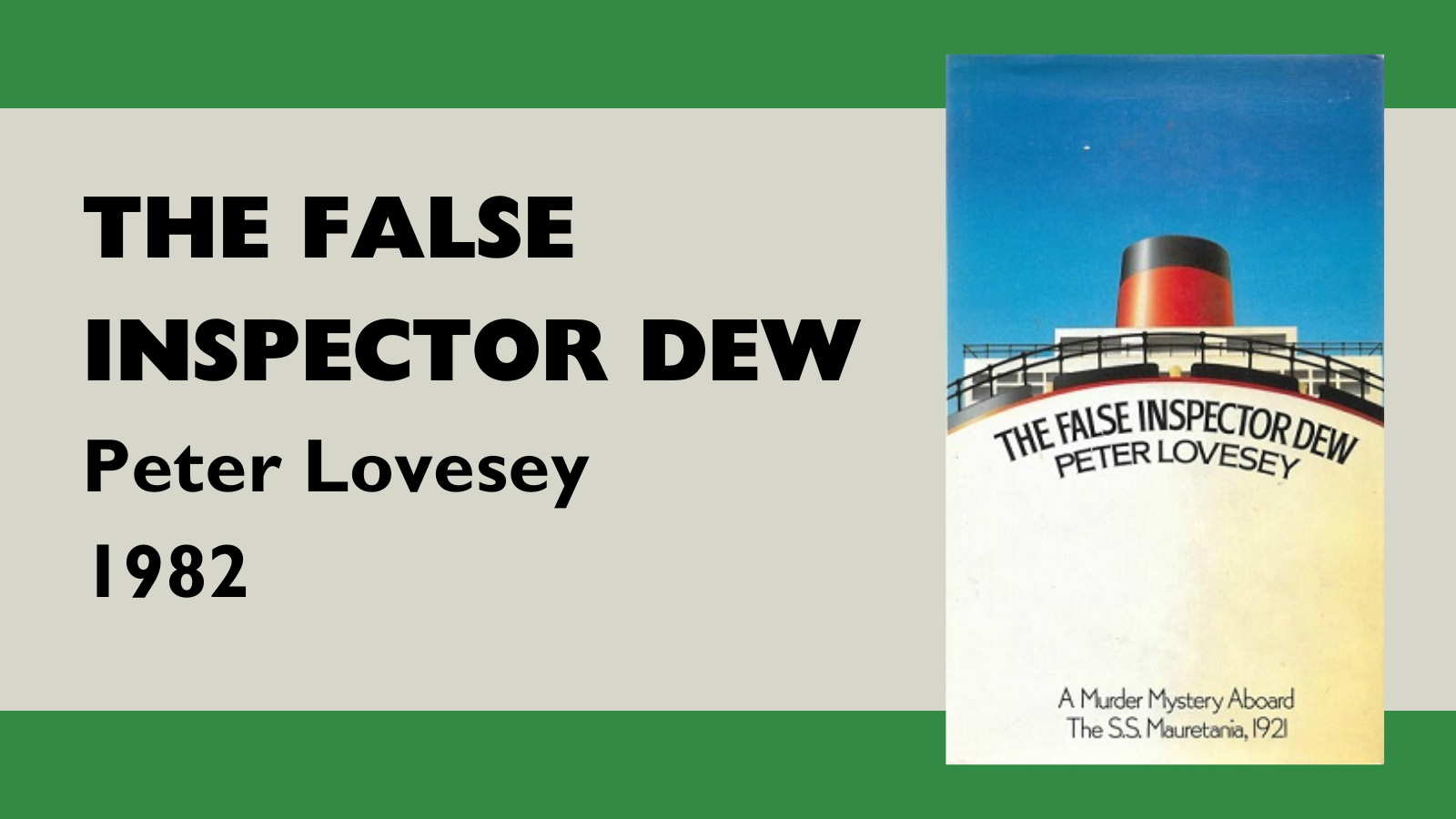
The real Inspector Dew is best remembered as the man who apprehended Dr Crippen and his mistress aboard the SS Montrose in 1910, bringing to an end their transatlantic flight from justice following the murder of Crippen’s wife. In The False Inspector Dew, Peter Lovesey imagines another journey across the Atlantic 11 years later, this time aboard the SS Mauretania. Another man is fleeing with his mistress and Inspector Dew is again called upon to investigate a murder. This time, however, the Inspector is an impostor — in reality, he’s a middle-aged dentist called Walter Baranov. A false Inspector Dew.
It’s difficult to describe much of the plot without spoilers. The book begins slowly, with twenty-five chapters of exposition before the Mauretania leaves Southampton. In a series of different scenes, we are introduced to most of the key characters who will soon meet on the voyage. Foremost among these are Mr and Mrs Baranov and Walter’s patient Alma Webster. Influenced by her love of romantic novelist Ethel M. Dell, Alma fantasises about a future life with her dentist, and proposes an unorthodox way of fulfilling her dream.1 You’ll have to read the book to discover how things unfold, but suffice to say, Lovesey gives us multiple surprises and unexpected twists before the very satisfying final chapter.
There is something very compelling about Lovesey’s writing in The False Inspector Dew. Although there is a slow build-up to the main events, I found myself fully invested in the narrative. Before writing this review, I read some comments on the book by H. R. F. Keating, which are apt: “[Lovesey] employs no fireworks of style… instead he puts a never-ending series of little questions into one’s mind. What will so-and-so do next?, one constantly asks. And constantly keeps reading to find out.”2 This was definitely my experience. Lovesey also makes clever use of dramatic irony, with gentle humour throughout.
Lovesey’s writing evokes an authentic 1920s atmosphere, with compelling period descriptions of life onboard the Mauretania. I’m not sure card sharpers do such good business on P&O Cruises today, and you’ll probably find fewer Lanchester saloon cars in the parking facilities.3 The fancy dress ball is a particularly memorable highlight:
It was amazing how many materials and ‘props’ came to hand when the passengers really applied themselves to creating fancy dress. In one stroll along the boat deck that afternoon she had seen pieces of rope being teased into wigs and beards, hats fashioned from table napkins and togas from Company bedspreads.
The False Inspector Dew was highly acclaimed when it was first published, winning the CWA’s Gold Dagger award in 1982. The CWA also included the title in their 1990 list of Top 100 crime novels as a premier example of historical crime fiction, and H. R. F. Keating featured it in his 1987 Top 100 list too. I’m not sure I would rate it quite so highly; some weaker moments stopped this being a five-star read for me. But it’s still an excellent book that deserves high commendation, and it’s confirmed me in my desire to read more Lovesey. Sergeant Cribb next, I think.
Verdict: ⭐⭐⭐⭐ (4/5)
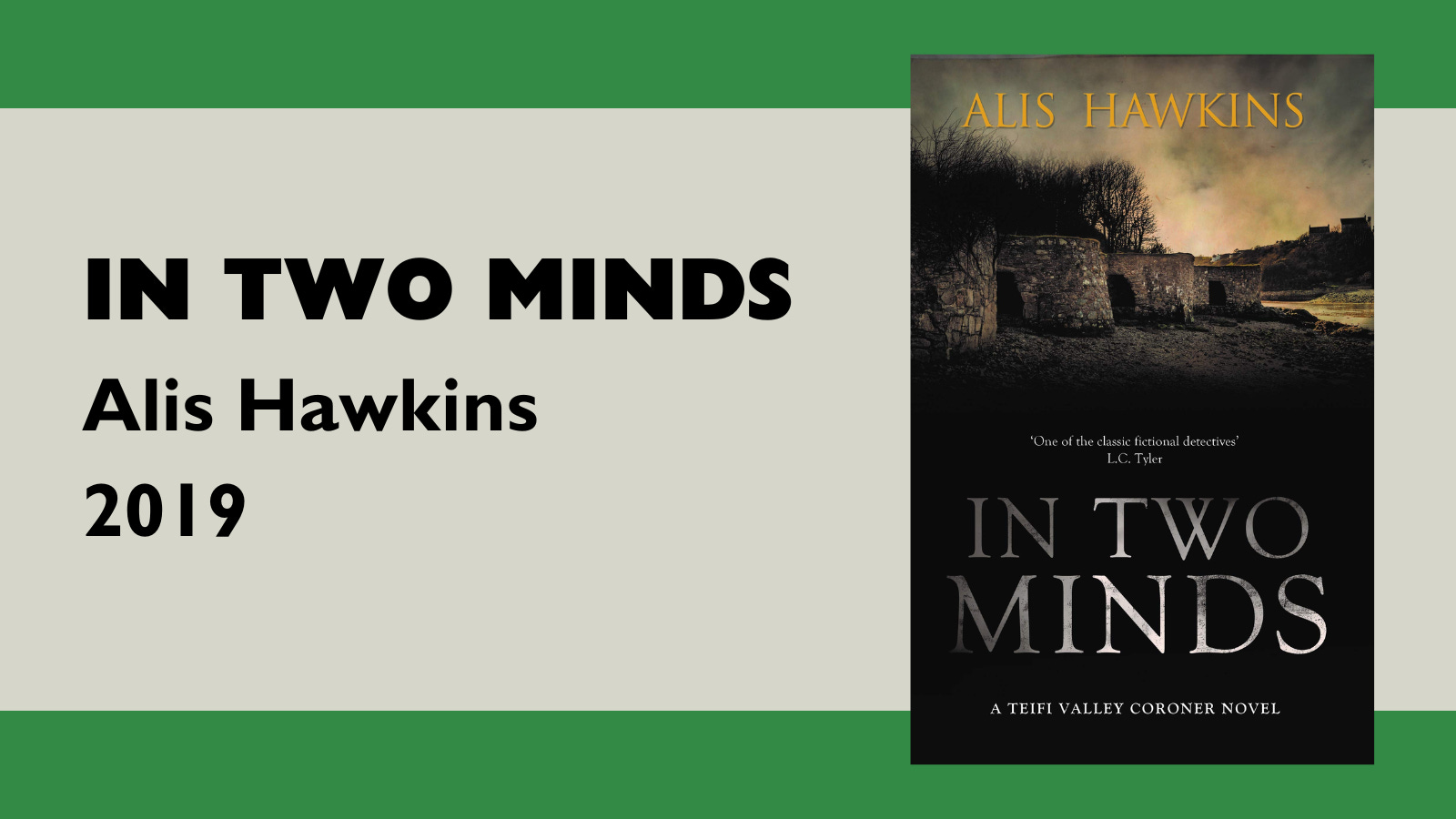
In Two Minds is the second instalment of Alis Hawkins’ Teifi Valley Coroner series, set in West Wales during the mid-nineteenth century. The coroner in question is Harry Probert-Lloyd, whose career as a barrister has been stymied by his failing eyesight. I read the first book of the series last year on the recommendation of my friend Phil and very much enjoyed it. I’m pleased to say I enjoyed this sequel too.
Like The False Inspector Dew, a transatlantic crossing provides the historical setting for the mystery. In this case, the investigation unfolds in the context of an emigration scheme to take Welsh hopefuls to a new life in the Americas. Although the novel’s specific scheme is fictional, multiple waves of Welsh emigrants did travel across the Atlantic in the nineteenth-century, many settling in southern Ohio.4 In fact, the volume of Welsh emigrants led to the counties of Jackson and Gallia becoming known as “little Cardiganshire.”5
In Two Minds opens with an unidentified dead body dumped on Tresaith Beach, on top of a shipment of limestone. Harry Probert-Lloyd is called in as acting coroner, with his returning sidekick John Davies. Harry causes much exasperation by adjourning the inquest, when the magistrate, police inspector and many rate-payers would prefer a quicker (and cheaper) verdict. Harry’s investigative instincts are vindicated when it becomes clear that foul play is involved. The victim’s identity connects him with the transatlantic emigration scheme and this connection provides several people with motives for murder. Alternating chapters recount the first-person perspectives of Harry and John as they discover the truth of what really happened on Tresaith Beach.
Alis Hawkins creates a convincing historical atmosphere, capturing the social and class tensions of the period. This especially comes to the fore in Harry’s interactions with suspects and witnesses. Harry is the squire’s son, but he’s uncomfortable with his identity as a gentleman and has moral objections to the economic system that has secured his family’s wealth. He attempts to subvert social expectations, including in his use of the Welsh language when someone of his status should speak in English. Characters from different backgrounds struggle with Harry’s socially nonconforming behaviour for different reasons, including his assistant John. This adds a certain tension in their relationship, which makes the investigation harder for them, but enriches it for us.
Hawkins has clearly done a substantial amount of historical research to make the narrative convincing. As well as the emigration backdrop, In Two Minds gives an insight into the changing world of medicine. The Anatomy Act of 1832 gave surgeons and medical students legal access to certain dead bodies for dissection, but autopsy examinations continued to be viewed with suspicion by many. Harry enlists the help of Dr Reckitt, whose enthusiasm for autopsies causes some squeamishness, and even abhorrence, especially in the case of children. I also enjoyed reading about the Welsh tradition of the tŷ unnos (one-night house) — “If you could raise a house on common land between sunset and sunrise of a single night, and have smoke coming from the chimney as the sun came over the horizon, you were allowed to enclose the ground around it.”6
The mystery itself is very engaging, and generally moves at a good pace, though some parts of the investigation are perhaps overlong. There is an interesting cast of suspects and some great descriptive writing. You don’t have to just take my word for it: In Two Minds was shortlisted for the CWA Historical Dagger in 2020, though the final award was given to Abir Mukherjee for Death in the East. There are two more Teifi Valley Coroner books. I look forward to reading them.
Verdict: ⭐⭐⭐⭐ (4/5)
Lord Peter Wimsey, in The Unpleasantness at the Bellona Club, quipped: “Passionate spinsters read Ethel M. Dell. And dull men in offices read detective stories.” Coincidentally, the conversation continues with a discussion of the Crippen case (“When Crippen and Le Neve were taken on the steamer, they were reading Edgar Wallace.”)
From H. R. F. Keating, Crime and Mystery: The 100 Best Books (Carroll & Graf, 1987), pages 205-206.
Other cruise companies are available.
Fun fact: Sixteen of the original fifty-six signatories to the American Declaration of Independence were of Welsh descent.
There’s a short article about this emigration on the BBC news website: https://www.bbc.co.uk/news/uk-wales-44240447.
This is a character’s description of the practice. There’s an interesting BBC article about it here: https://www.bbc.co.uk/news/uk-wales-53854853.
"Five Passengers From Lisbon" by Mignon G. Eberhart is the best ocean-going mystery I've read so far. "S.S. Murder" by Q. Patrick was pretty good too, as I recall.