
Letters from Dorothy
The correspondence of a detective novelist

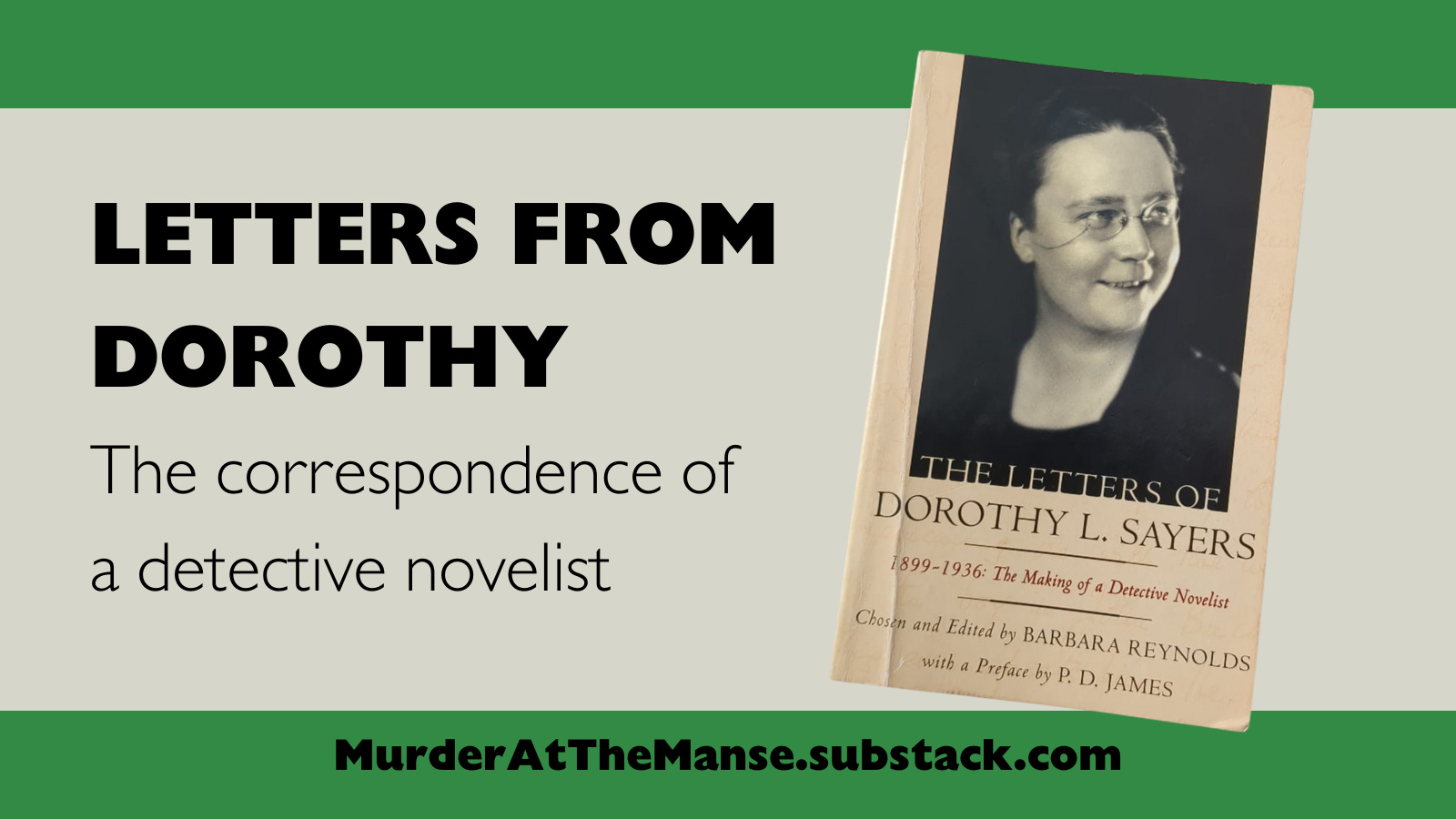
Three years ago, I completed a chronological readthrough of the eleven Lord Peter Wimsey novels. It was only after finishing Busman’s Honeymoon that I actually started to learn more about Dorothy L. Sayers and her fascinating life. Last year, I read the excellent Square Haunting (2020) by Francesca Wade, which discusses Sayers alongside four other residents of London’s Mecklenburgh Square: Virginia Woolf, Hilda Doolittle (H.D.), Eileen Power and Jane Harrison. This left me with an increased appreciation for her talent and determination as a writer, and a desire to re-read some of her novels, especially Gaudy Night—one of my least favourite Wimsey novels (sorry not sorry), but one deeply rooted in her personal experiences. Over recent weeks, I’ve enjoyed exploring the mind of Dorothy L. Sayers further through a secondhand collection of her correspondence, published by Hodder & Stoughton in 1995.
This is the first of a four-volume set of her letters, chosen and edited by Barbara Reynolds, biographer and president (at the time) of the Dorothy L. Sayers Society.1 Volume 1 is subtitled 1899-1936: The Making of a Detective Novelist, covering the years of most interest to detective fiction readers. It begins in 1899, with 5-year-old Dorothy writing to her mother while she was away in Oxford (“I am going to have a violin practice with Daddy when I have done my letter”). It ends in 1936, after the last Wimsey novel had been completed and Sayers had received an unexpected invitation to write a play for Canterbury Cathedral, which later became The Zeal of Thy House (“I have cut out two unnecessary monks”). A huge amount of archival work must have been involved in compiling these letters, which are excellently edited with helpful footnotes explaining at points who or what Sayers is talking about.
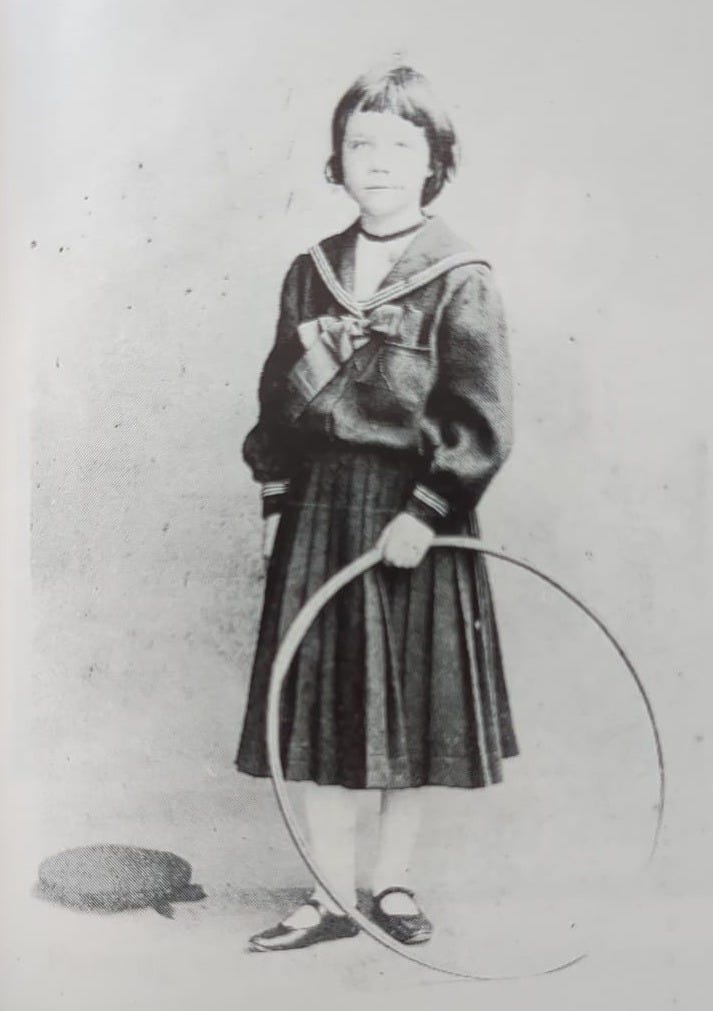
The early letters reveal a precocious child, displaying a flair for creative writing that would later make her a best-selling novelist. From a historical perspective, they also give an insight into a very different social world, especially in terms of education. Sayers was a student at Oxford University before women were actually awarded degrees. During this “probationary” period, female undergraduates always had to be accompanied by an older chaperon at social events, and also had to sit separately from male students for exams. When Sayers once accidentally transgressed this rule, one room supervisor rushed towards her with “wildly-waving arms and a terrified expression”. I also enjoyed the image of a 1912 fire drill, where the undergraduates had to exit via the windows using bedsheets: “I went first, and breathed a devout prayer of gratitude when I found the knot was firm!”
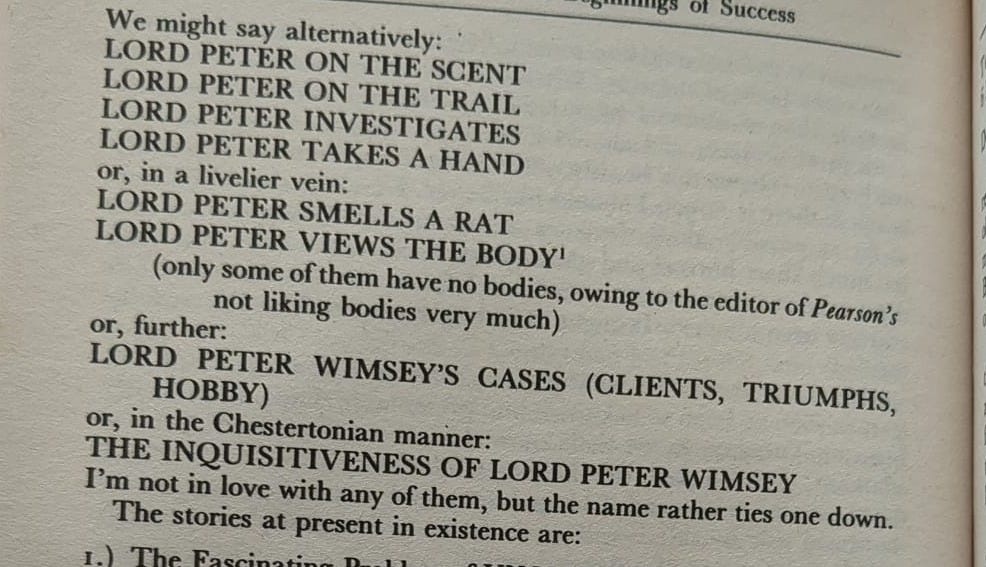
Lord Peter Wimsey first enters the chat in a letter to her mother on 22 January 1921. Acknowledging a delivery of “lovely eggs”, Sayers mentions that she has been “visited with ideas for a detective story”. The story in question was published as Whose Body? two years later. Her letters, though, reveal a lack of confidence in the project. In October, having written most of a draft, she admitted to being “rather disgusted” with the result, adding: “I don’t suppose anything will come of it.” This lack of confidence continues in later years. In May 1927, she described Unnatural Death as “a disagreeable book and no one will like it.”
Sayers also wrote in several letters about her struggles with Gaudy Night, a book with which she had a kind of love/hate relationship. It was the novel she seemed most pleased to have written, and also most relieved to have completed. In a letter to a friend in June 1935, she described the writing as “being horribly difficult.” In a September letter to cousin Ivy, she said: “My book is now, thank goodness! practically finished — ages late, and not altogether satisfactorily, but there!” To publisher Victor Gollancz, she commented: “It may be highly unpopular, but, though I wouldn’t claim that it was in itself a work of great literary importance, it is important to me.”
Financial worries appear periodically through her 20s, and she regularly acknowledges gifts from her parents. When Wimsey was first in development, she wrote: “I can’t get the work I want, not the money I want, nor (consequently) the clothes I want, nor the holiday I want, not the man I want!!” In one December 1921 letter to her mother she admitted, “One reason why I am so keen about Lord Peter is that writing him keeps my mind thoroughly occupied, and prevents me from wanting too badly the kind of life I do want, and see no chance of getting.” It was a challenge for Sayers to find work that was both meaningful and profitable. When reading vintage novels, it’s easy to forget the human hands that wrote them, but just like anyone else, Sayers was a person who needed to make ends meet.
Her humanity is also evident in the correspondence surrounding her son, John Anthony, whose identity she kept a secret from almost everyone, including her parents.2 John was conceived following an affair with Bill White, a married car salesman. Faced with limited options, Sayers sent her newborn son to live with her cousin Ivy, who fostered children. The truth about John only emerged after Sayers’ death, when he was named as the sole beneficiary in her will.3
It’s difficult to assess Sayers’ real attitudes towards her son as he grew up. There is evident sadness over the situation in much of the early correspondence with Ivy, but also sometimes a kind of emotional detachment. She confessed in 1929 that she didn’t feel a natural maternal affection: “I must really try to feel thrilled about him — but I don’t believe I ever should about any child under whatever circumstances!” The relationship seems to become easier for Sayers when John was old enough for her to correspond with him directly. Some of the later letters in this collection are written directly to John, signed from “Your affectionate Mother” and showing attentive maternal care. Even so, the relationship was clearly not all Sayers might have wished it to be. Understandably, the circumstances were very difficult, not least in the context of contemporary attitudes towards unmarried mothers. The reality of the situation must have affected Sayers enormously, including as a writer.
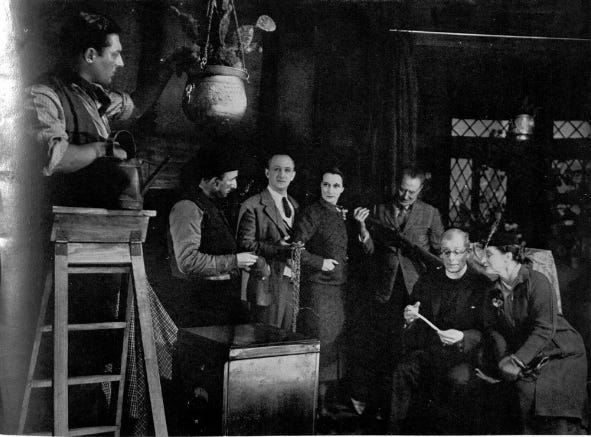
As well as reflections on the Wimsey novels, it was very interesting reading the correspondence around the play Sayers co-wrote with Muriel St. Clare Byrne, Busman’s Honeymoon, which was later adapted into the final Wimsey novel. This is an unusual order of events for a detective novelist — normally novels are turned into plays, not vice versa. Writing to her agent David Higham in October 1936, Sayers insisted: “It must be made quite clear that the story was originally written as a Play, and that the novel was to that extent ‘the book of the Play’… It is extremely important from the management’s point of view that people should not suppose the Play to be ‘the novel with all the best bits left out’ which is the sort of thing critics and audiences always say if they imagine that the Play has been taken from the book.” In the end, critics and the public were divided in their opinions — it was well-received by theatregoers, but (as she commented to a friend), “the play seems to have made some of the critics very cross indeed.”
Beyond her own writing, Sayers offers us a few insights into her thoughts on the wider world of detective fiction. For example, in a March 1933 letter discussing contributors for the Sherlockian essay collection Baker Street Studies, Sayers assesses some of her colleagues, including Ronald Knox (“dreadfully slipshod… a difficult man to get work out of”), Milward Kennedy (“a man of great charm, energy and affability”), Anthony Berkeley (“too rough a parodist”) and John Rhode (“though a perfect elephant for work, not enough of an artist”). Her kindest words are reserved for E.C. Bentley, in an April 1936 letter to the author praising Trent’s Own Case:
“It is completely delightful. I do wish to Heaven you had given us more of these books, instead of letting twenty years flow between the banks of Trent! With you to help us, we should not have taken half so long to get the detective novel recognised as literature. Because, of course, that is the first thing and the last thing one feels: that yours are BOOKS, full of humanity and the Humanities, touching life on all sides instead of being directed along one narrow line to an infinitesimal point, like so much of our stuff.”
This volume also includes a 1930 letter to Evening Standard journalist Arnold Bennett, commending him for an article exposing the truth about the “Crime Club”. This recently-established Club purported to be an organisation run by “well known connoisseurs of Detective Fiction”, but was actually a promotional campaign for just one publisher, Collins.4 In the opinion of Sayers: “While I have the greatest sympathy with every kind of advertising enterprise, I do feel that there has been in this particular case rather more camouflage than is altogether creditable.”
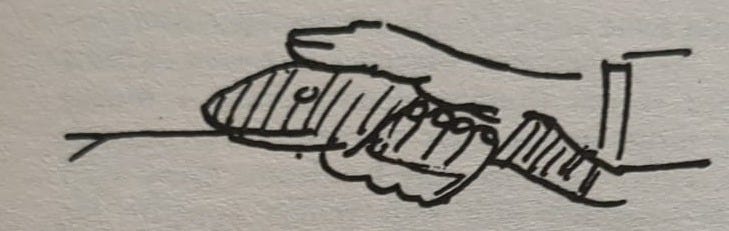
There are miscellaneous other Sayers opinions that are delightful to read. I laughed at her scathing review of J. M. Barrie’s creation: “Appendicitis is far preferable to liking Peter Pan — the knife can cure the one for ever, but Barrie-itis is a deformity of the soul which no treatment can remove.”5 I also enjoyed her assessment of Derbyshire, shared with her son in June 1936: “It is as cold, bleak and stony a county as one could wish to find — very bracing, no doubt, but (I should think) uncommonly disagreeable in the winter.” As a bonus, there are a few wonderful hand-drawn illustrations, such as the picture sent to cousin Ivy in June 1932, showing the correct way to pick up a snake.
Overall, this is a very well-edited collection, providing a unique insight into a fascinating author, and some of the circumstances and people that shaped her. It’s a good way of discovering the real human author behind the Lord Peter Wimsey novels, in more depth than is possible for most Golden Age writers. The letters also illuminate some of the societal values and structures that shaped other contemporary crime authors. One surprise is how little Sayers talks about Christian belief and practice after her early years, until the invitation to write a play for Canterbury Cathedral. It would be interesting to read more about what happened to her faith in this time, and what led her to become a more devoted Christian writer and thinker. I guess I need to read Volumes 2, 3 and 4 at some point…
Verdict: ⭐⭐⭐⭐ (4/5)
Barbara Reynolds died in 2015, shortly before her 101st birthday.
Barbara Reynolds mentions in the introduction that the idea of publishing a collection of Dorothy L. Sayers’ letters first originated with the author’s son. This endorsement makes it much less awkward to read about the evolution of this family secret.
The excellent Shedunnit podcast covered the story in a 2020 episode. You can read the transcript or listen to the recording here: https://www.shedunnitshow.com/dorothyssecrettranscript-67b4b24d4baa63001bbc4e57/
The background to the Crime Club, and some letters of disapproval, can be found in John Curran’s excellent illustrated history The Hooded Gunman (Collins Crime Club, 2019), pages 21-24.
From a letter to John Cournos, 5 February 1925.
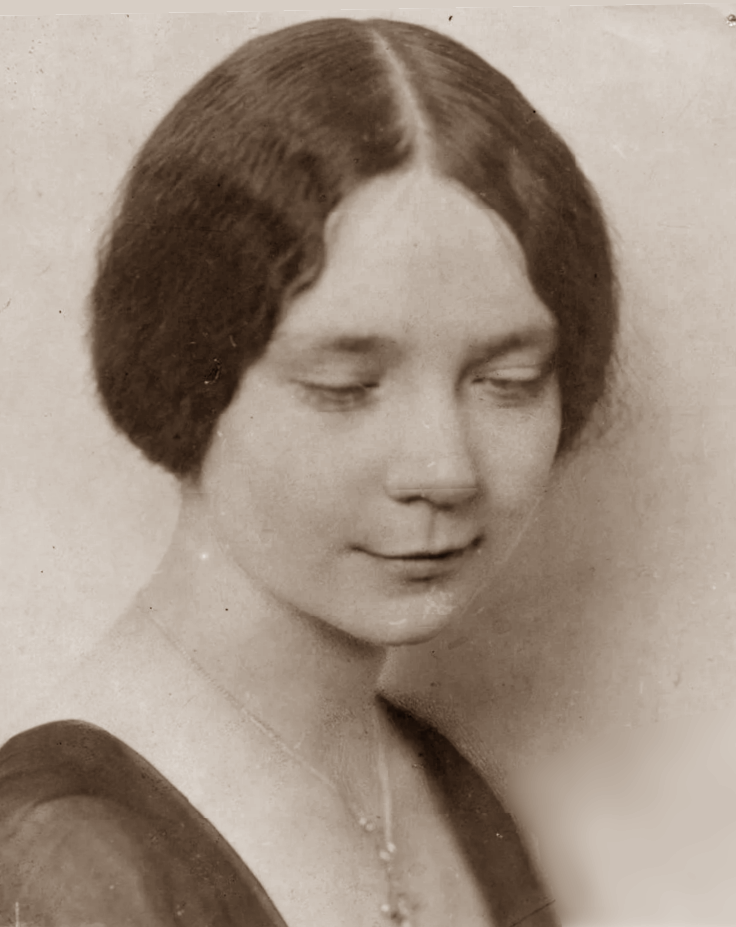
We devoured all the Dorothy Sayers novels years ago. My favourite was probably « Gaudy Night »! This volume of letters in in one of the boxes of books we have yet to unpack following our move to France, so your review has whet my appetite. A fascinating woman. I studied the medieval work La chanson de Roland at uni and was fascinated to discover she’d translated it for Penguin. She looks so young in the photo from 1925 you include in your article.
Fascinating. I'm only half way through my Sayers read-through. And not enjoying them as much as I thought I would so far...