
Celebrity Crimes
Osman and Mortimer on trial

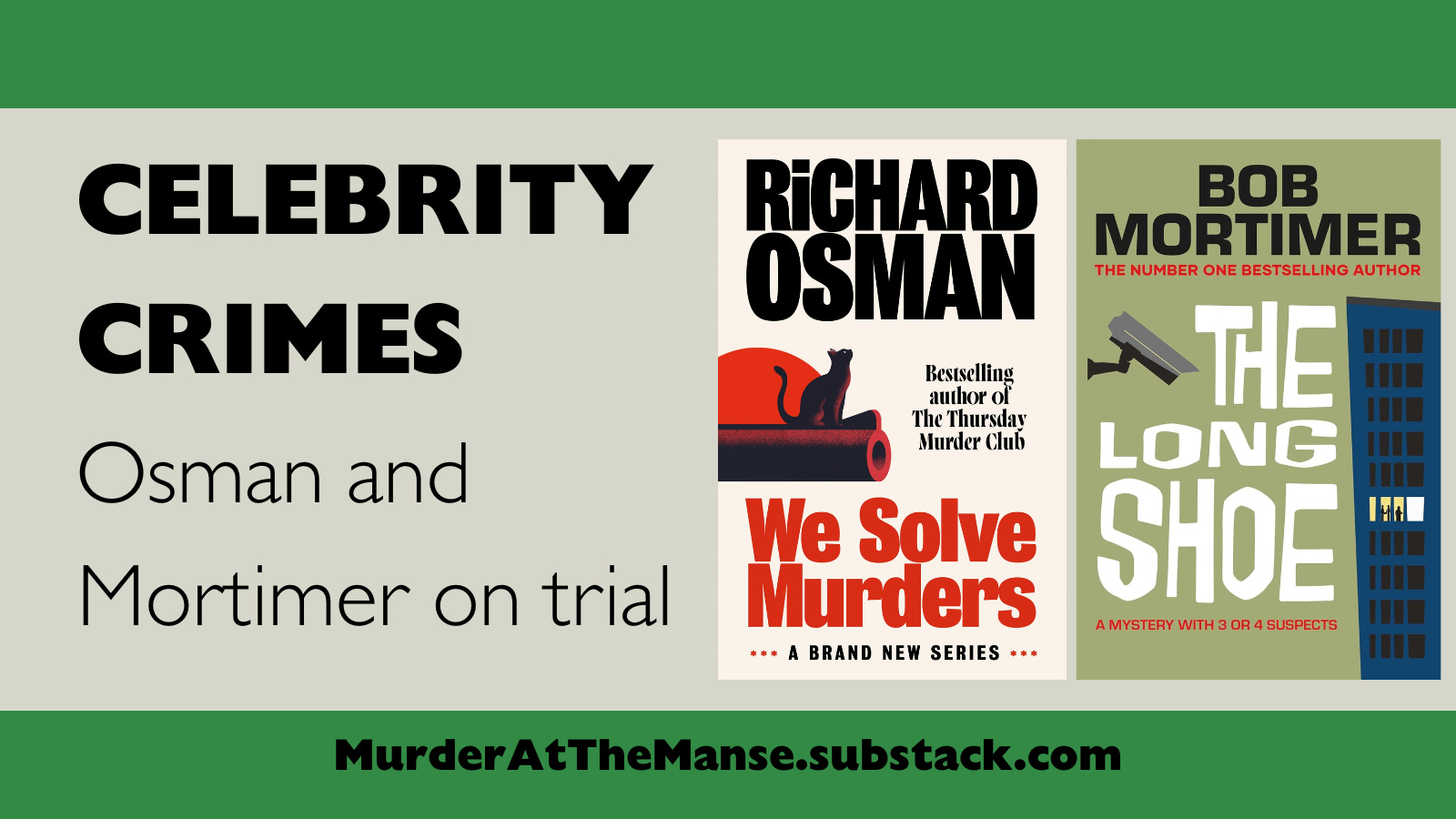
In 2020, eleven years into his tenure as co-presenter on the popular daytime TV quiz Pointless, Richard Osman made a much-hyped entry into the world of crime fiction.1 The Thursday Murder Club series has been a huge commercial success, which has made Richard Osman very rich and prompted publishers to search for other celebrities who might produce the next criminal bestseller.
Since 2020, the list of British celebrities who have turned their hand to crime-writing includes political journalist Robert Peston (2021), the 80s musician and Anglican priest Richard Coles (2022), ex-MP Alan Johnson (2022), comedian Bob Mortimer (2022), Britain’s answer to Judge Judy, Judge Rinder (2023), Countdown’s guardian of words, Susie Dent (2024), former news presenter Louise Minchin (2025), and radio stalwart Jeremy Vine (2025). I think it’s fair to say that some of these have been more successful than others.2
As someone who prefers their crime more vintage, I have not paid much attention to this publishing trend, but I have read books by two of these celebrities, both of whom have genuine merit as writers. So, this week on Murder at the Manse, we’ll make a voyage into the 21st-century to look at Richard Osman’s We Solve Murders (2024) and Bob Mortimer’s The Long Shoe (2025).

I started reading Richard Osman’s Thursday Murder Club books a few years ago (fashionably late), because my mum enjoyed the first book and gave me a copy. I ended up being pleasantly surprised. The writing was engaging, the characters felt very human and the plotting was better than I expected. Several times, I thought I had seen through Osman’s misdirection, only to discover that he was sneakier than I had given him credit for. It was enjoyable as a light read and I continued with the series, but I began to tire of Coopers Chase and the TMC formula by book 3. When We Solve Murders was published, I was intrigued to know what Osman would do with a new setting. And then my mum gave me a copy.
The detective team in We Solve Murders consists of Amy Wheeler, who travels the world as a bodyguard to the rich, and Steve Wheeler, her retired father-in-law who lives in an English village and investigates small local mysteries under the agency name Steve Investigates. While Amy is on an assignment to protect the world-famous author Rosie D’Antonio, she and Steve begin investigating why multiple clients of Amy’s security firm have been murdered. Their enquiries span multiple destinations, including South Carolina, Ireland and Dubai. At the heart of their investigation is a mysterious criminal mastermind using the alias François Loubet, who covers his tracks by using ChatGPT to rewrite his messages “in the style of a friendly English gentleman.” As the book’s title indicates, Amy and Steve do eventually solve the murders and unmask Loubet’s true identity, so everyone can live happily ever after. Except, of course, all the people who’ve been killed along the way.

Steve and Amy make an excellent pairing, with their contrasting perspectives on the situation they’ve been plunged into. Steve enjoys his quiet village life and hopes everything will be wrapped up before the pub quiz on Wednesday night. Amy thrives on adrenaline and hopes there will be a gunfight at some point. I especially warmed to Steve, whose response to being offered sushi on a private plane is to ask if he can have a Scotch egg instead. We Solve Murders shows Osman’s adeptness at creating well-developed and interesting characters, whose personalities are introduced organically through the narrative, without long information dumps.
Osman’s writing is entertaining, with wonderful dialogue and an ability to enrich scenes with minor amusing details. He follows the same style as the Thursday Murder Club novels, with short chapters (101 in total) that jump between different character perspectives, often bringing us into a new scene halfway through a conversation or a thought. At points, this style becomes grating and I found the shifts in perspective too rapid, but Osman compensates with a good amount of humour and periodic laugh-out-loud moments. I especially enjoyed the opening lines of chapter 28:
Bonnie Gregor’s influencer dream had started small.
And yet here she is, just a year later, on a train to Letchworth Garden City.

I have mixed feelings about the plot, largely because of Osman’s love of ridiculously overblown scenarios. For some readers, I realise the implausibility of the plot adds to its escapist quality. For me, though, the level of preposterousness diminished my interest in the mystery. In a world where anything can happen, I start to care less about what actually did happen. I almost gave up on page 245 for this very reason, although the engaging writing kept me going. The solution to Loubet’s identity will become clear to attentive readers before the end, but I did still admire Osman’s central attempt at misdirection.
If you want a non-demanding mystery book for the beach this summer, We Solve Murders could be a good choice. I’m not sure if I will keep reading Osman’s books, but I might be tempted back. If nothing else, I’ve left this book more convinced that Richard Osman is a really lovely guy: the Acknowledgements section is six pages long, and full of genuine gratitude, including a commendation of booksellers and librarians. Thank you, Richard, for your thankfulness.
Verdict: ⭐⭐⭐ (3/5)
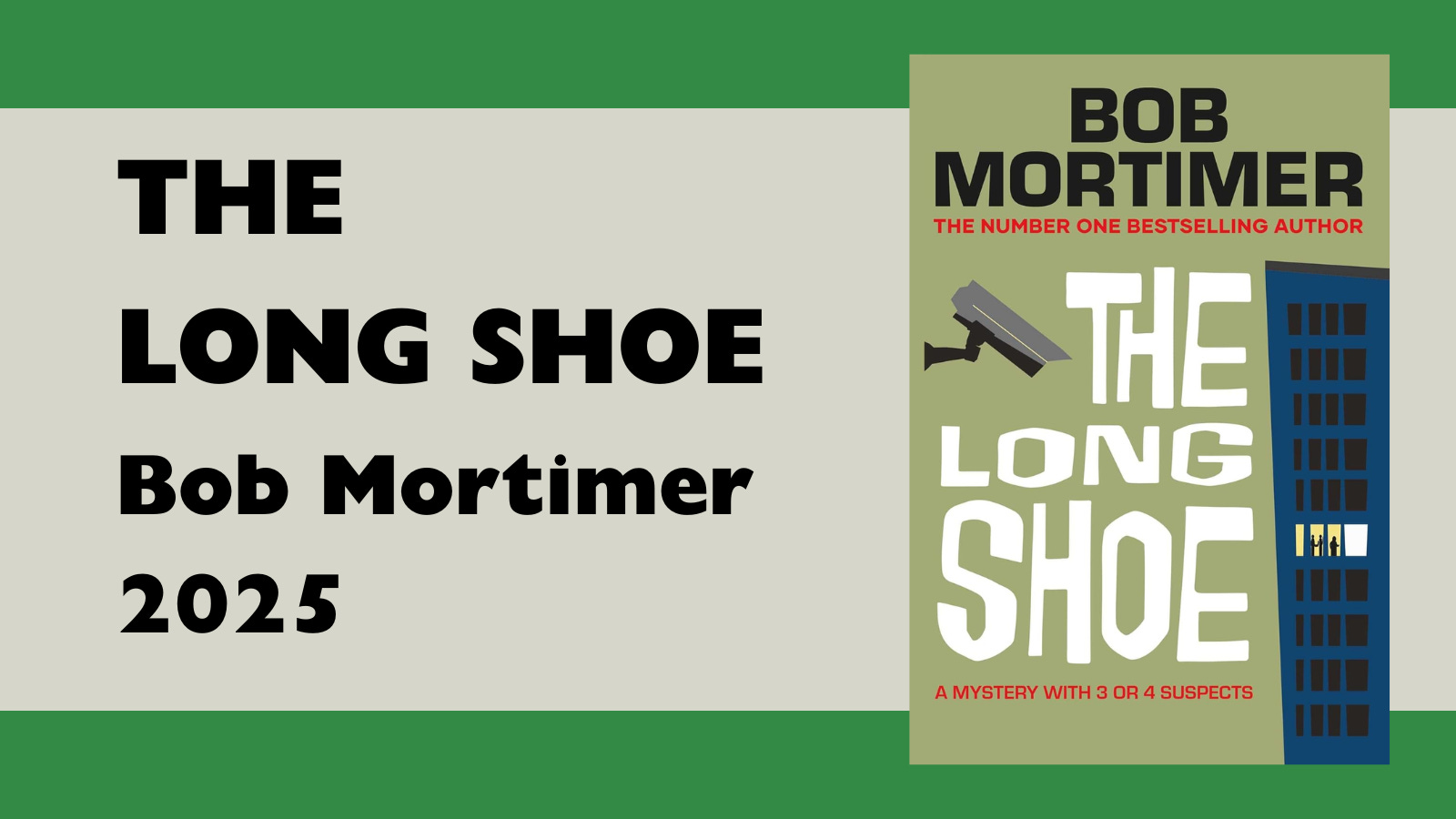
As a long-term fan of surreal comedian Bob Mortimer, I was delighted when he published his first novel, The Satsuma Complex, in 2022.3 Sadly, my reading experience proved to be mildly disappointing: although I enjoyed the conversations about pies and the use of a talking squirrel as a narrative device, I wasn’t entirely convinced that Mortimer’s brand of comedy transferred well to a novel format. But when I was given a copy of his newest novel, The Long Shoe, I decided to give Mortimer a second chance. And I’m glad I did.
Our protagonist in The Long Shoe is unemployed bathroom salesman Matt, who is given an intriguing job offer, which comes with luxury accommodation in Satsuma Heights. Matt takes the new job and the new flat, hoping that his improved situation will succeed in tempting back his partner Harriet, who has recently left him, somewhat abruptly. Harriet does not immediately return and Matt’s new circumstances become increasingly puzzling. Matt attempts to solve the mystery of what really happened to Harriet and why he was really approached to take up residence in Satsuma Heights, with the help of (to quote the blurb) “a Yorkshire gangster, a luxury bathtub, his cat Goodmonson and a yoga guru.” And, of course, there’s a two-and-a-half-foot-long black leather shoe in play as well.

Bob Mortimer’s whimsical storytelling works well in The Long Shoe, which features consistently entertaining writing, right from the opening line:
The moment I woke up, it hit me. I really fancied a soft-boiled egg.
Throughout, the author displays his flair for interesting descriptions, like: “His fixed expression reminded me of a stoat experiencing its very first vinegar crisp.” Or: “Although suitable for light outdoor use, my slipper shoes were useless when it came to absorbing the impact of my feet on the hard paving stones.” Or my favourite: “Her words seemed far away, like she was shouting from inside a distant pudding.” There is plenty of quirky dialogue too.
As some of the above comments may suggest, this isn’t a book to be taken too seriously. After all, one of the back-cover endorsements comes from “Chance Baxter’s dentist”. And yet, this comic novel does still have real substance. The characters are not just two-dimensional figures serving a humorous storyline. There’s a human depth to the main cast, with ambiguous facets of their personality or life-story preventing the narrative from becoming predictable. Also, although no-one would primarily read this for the plot, the central mystery is genuinely interesting. Mortimer gives us a few good red herrings and one especially excellent piece of misdirection, which results in a shift of perspective later in the book. The author arguably relies too much on some convenient coincidences — but again, no-one primarily reads this for the plot.
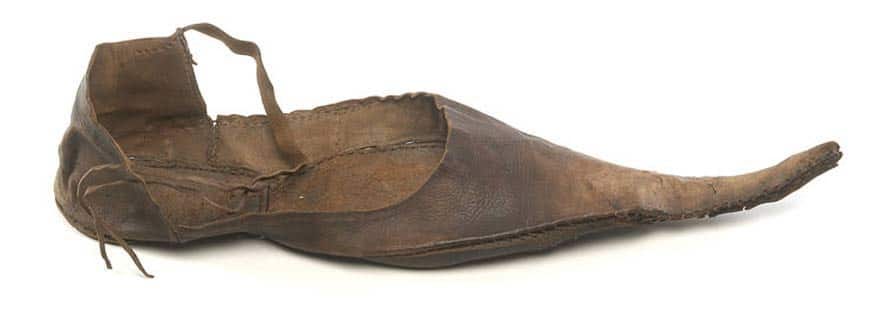
If you want an amusing summer read that will make you smile, while also giving you an actual mystery with genuine characters, The Long Shoe might be worth adding to your to-read list. I primarily aim this recommendation at my British readers, as I’m not sure how well Bob Mortimer’s humour translates. Ultimately, as Doug Waffle says in his endorsement, “The shoe is terrifying and so incredibly long.”
Verdict: ⭐⭐⭐⭐ (4/5)
Have you been pleasantly surprised by any celebrity crime-writing? Let me know in the comments!
A cynic might wonder if at least one of these used a ghostwriter, but my lawyer advises me to avoid making that suggestion.
If you’re not familiar with Bob Mortimer, perhaps the best place to start is with a compilation of stories he has told on the panel show Would I Lie To You? This one, for example.