
A 1920s Top Five
A Top Five from the 1920s

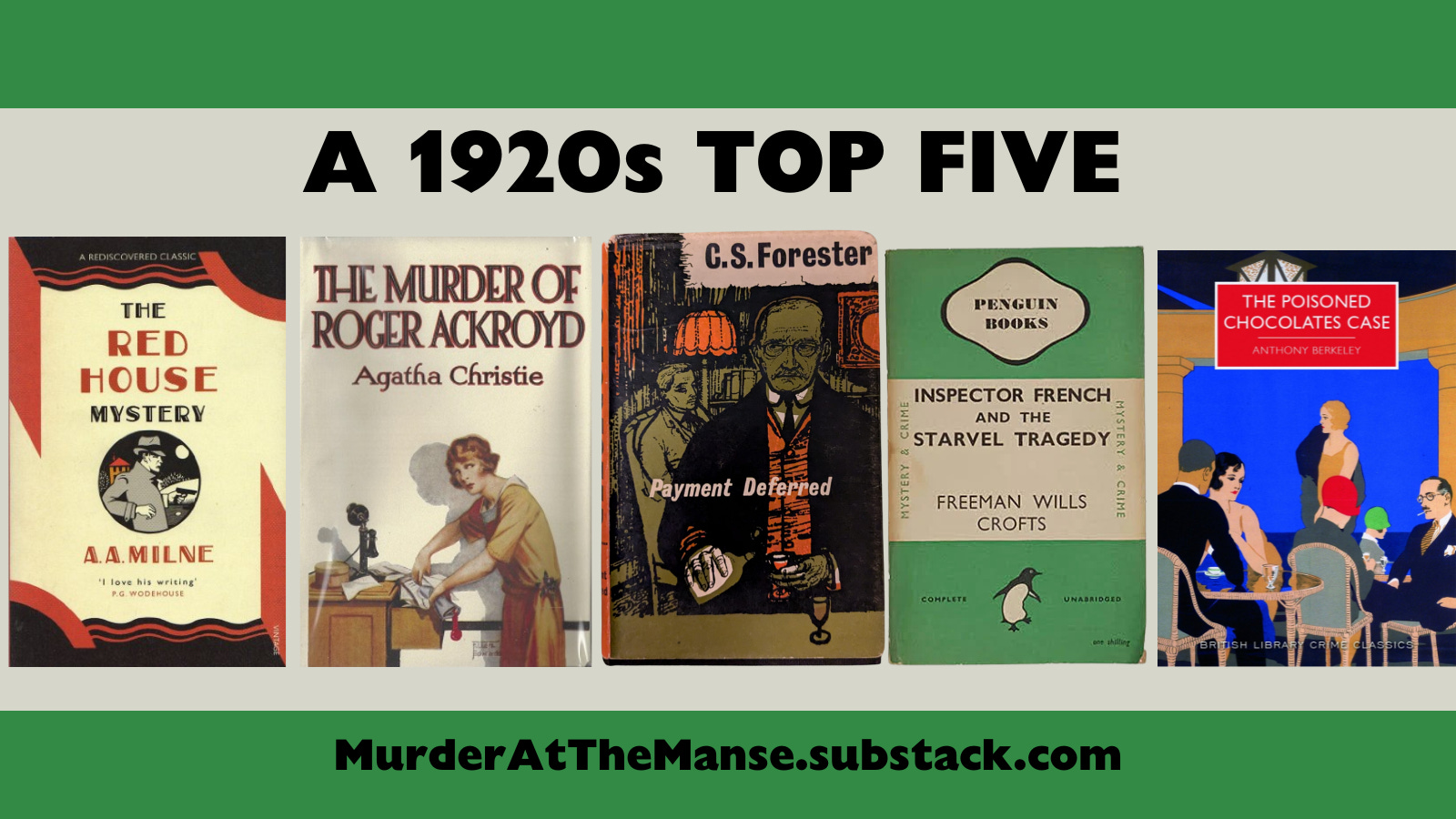
Recently-ish, a number of bibliobloggers have shared their lists of favourite 1920s mysteries, including Kate at Cross-examining Crime, Brad at Ah Sweet Mystery, John at Countdown John’s Christie Journal and Aidan at Mysteries Ahoy!. As a fan of lists, I thought I would make my own contribution to this discourse, following on from my 1930s list last year.
I’ve read fewer than 40 novels from the 1920s, so it wasn’t particularly hard to narrow down the list, even with the added restriction of one book per author. I’ve listed my Top 5 below, which are all 5-star reads. If you forced me to make the list up to 10 with some 4-star reads, I’d also include Whose Body? by Dorothy Sayers (1923), The Mystery of Angelina Frood by R. Austin Freeman (1924), The Case with Nine Solutions by J. J. Connington (1928), The Man in the Queue by Josephine Tey (1929), and, if I’m allowed a short story collection, The Incredulity of Father Brown by G. K. Chesterton (1926).
Now on to the Top 5, in chronological order:
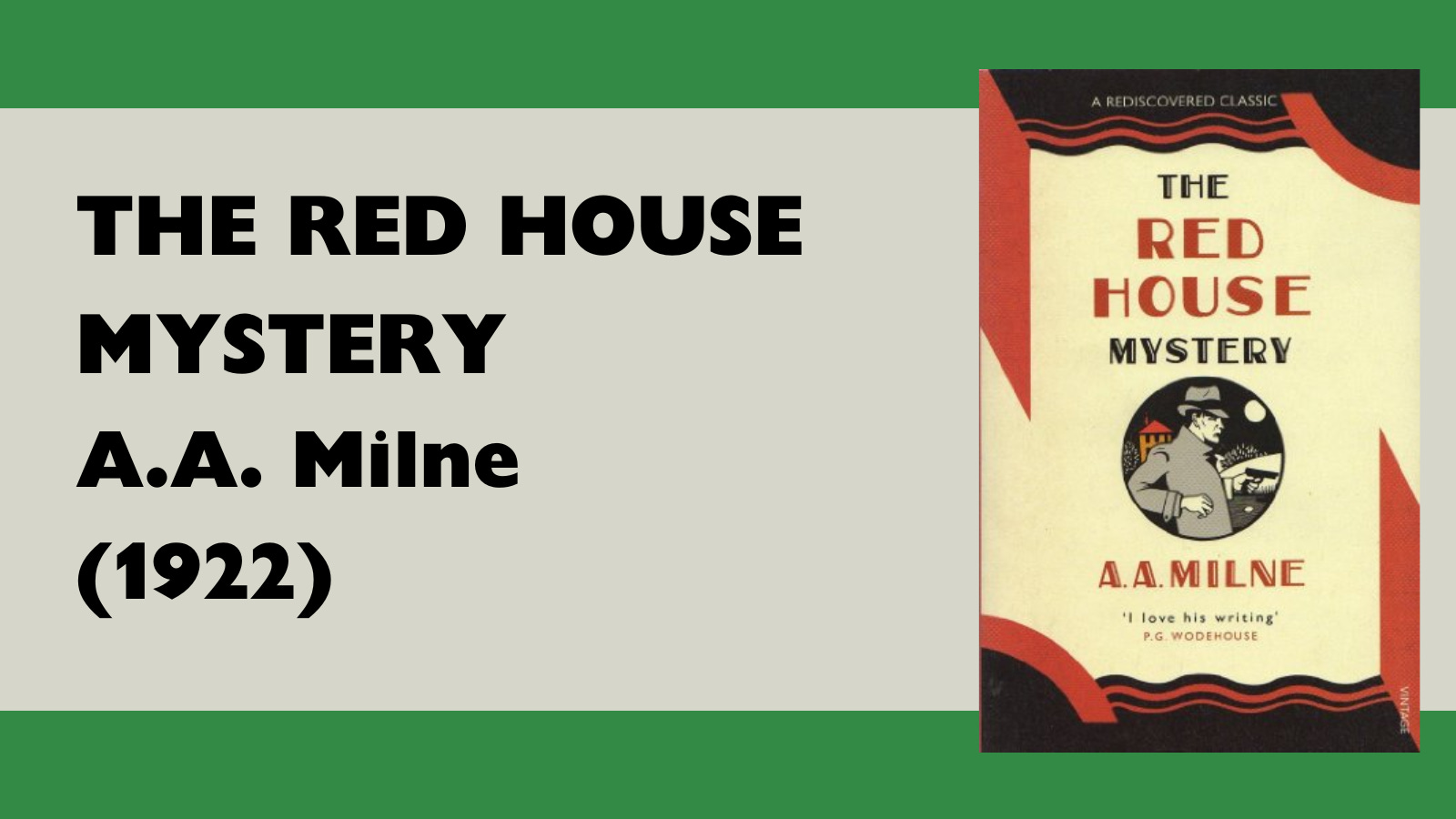
“People say nothing is impossible, but I do nothing every day.” That’s one of my favourite witticisms from the mouth of A.A. Milne’s most famous creation, Winnie-the-Pooh. Four years before Winnie-the-Pooh made his debut appearance, though, Milne employed his unique wit in the service of detective fiction, with The Red House Mystery, serialised in 1921 and published as a novel in 1922.
The Red House Mystery involves a mystery at the Red House, the home of Mark Ablett, which becomes the scene of a locked-room murder. The victim is Mark’s wayward brother Robert, recently returned from Australia. The crime is investigated by houseguest Bill Beverley and his friend Antony Gillingham, who form a Holmes-Watson partnership. In the investigation, Milne is committed to fair play — in his preface to a later edition, he offers as one of the criterion for an excellent murder mystery: “The detective must have no more special knowledge than the average reader.”
The Red House Mystery has somewhat divided opinion, described by some as a masterpiece and by others as “rather irritating”.1 I find myself among the former group of readers. In my view, this is a truly delightful mystery, showcasing Milne’s trademark dry wit throughout. Antony and Bill’s Sherlock-Watson pairing is wonderful, and Milne’s plotting ability is strong. I thought I had guessed the solution both times I’ve read it, but I was outwitted each time. (Yes, I have a bad memory for detective fiction plots). I am obviously fond of Winnie-the-Pooh, but I also really wish Milne had written more mysteries.2
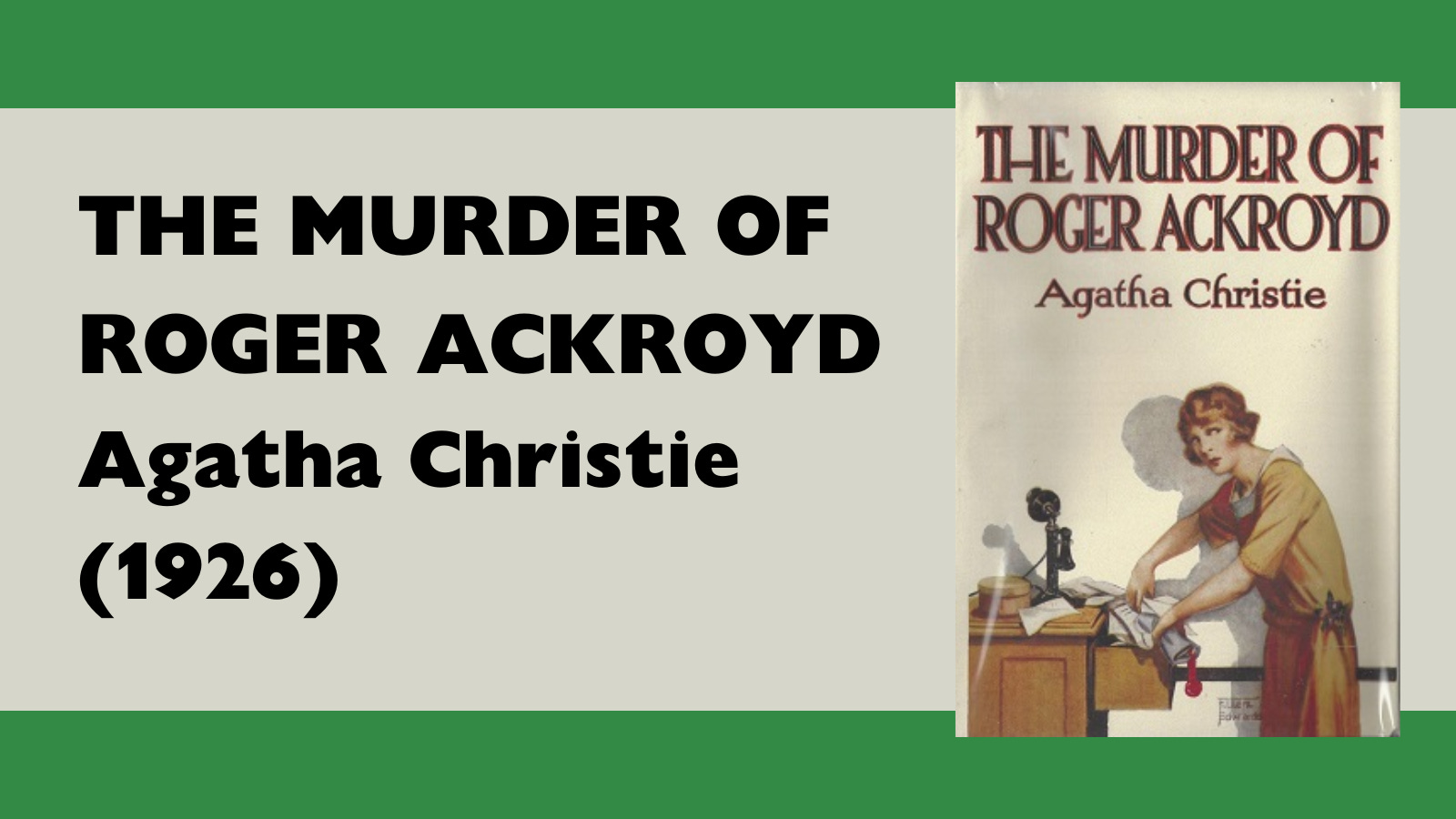
I’m not sure I need to say much about The Murder of Roger Ackroyd, which is widely celebrated, and for good reason. Overall, the 1920s was not a great decade for Christie, either personally or in terms of her literary output. Several of my absolute least favourite Christies come from this period, including (apologies in advance for any offence caused) The Man in the Brown Suit, The Secret of Chimneys, The Big Four and The Mystery of the Blue Train. But Roger Ackroyd is Christie at her best — a very clever mystery, with clues hidden in plain sight. And if you have the opportunity to read it without knowing the solution, it is absolutely stunning.
Of course, like The Red House Mystery, it has had its detractors. The Daily Sketch’s reviewer was not impressed: “Tasteless, unforgivable letdown by a writer we had grown to admire.”3 Which is actually remarkably similar in wording to the last email I received about this Substack…
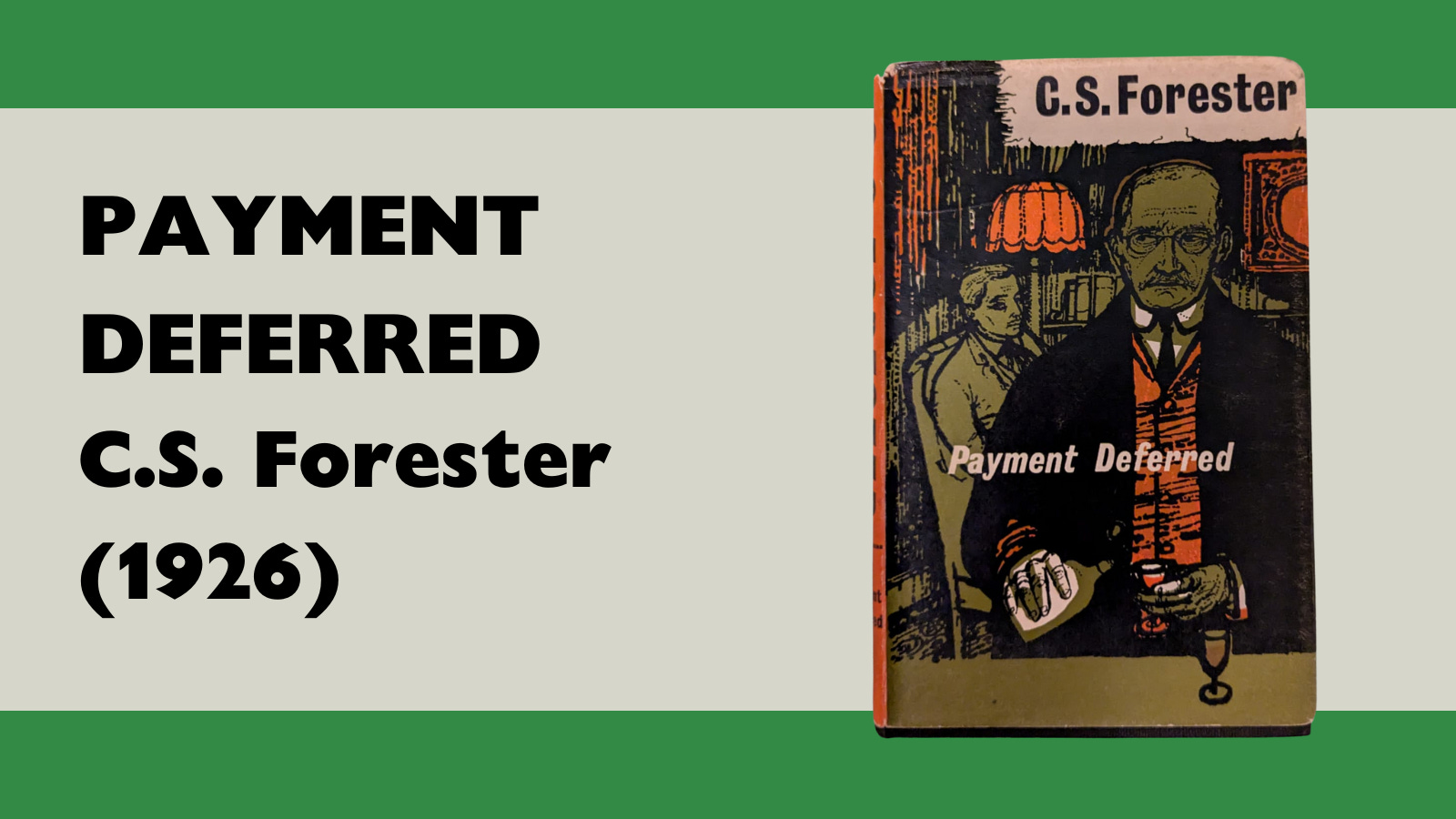
One of three crime novels written by Hornblower author C.S. Forester, Payment Deferred follows the exploits of bank clerk William Marble, who murders his nephew Jim for financial gain, buries him in the back garden, and becomes rich by speculating with his purloined funds. Things then begin to unravel, as Marble becomes gripped by the fear of discovery, exacerbated by his wife’s suggestion that their new wealth means they can afford to move house. The plot spirals inexorably towards a darkly satisfying ending.
This is an early example of a novel focussed on the psychology of the murderer, rather than the detection of a murder. It anticipates, by five years, the influential Francis Iles novel Malice Aforethought (one of the choices for my 1930s Top Ten). There are some obvious contrasts, though, between Payment Deferred and Malice Aforethought. Atmosphere is perhaps the most significant contrast: unlike the ironic wit of Francis Iles, Payment Deferred is unrelentingly bleak. It’s a gripping bleakness, nonetheless, with a tension-filled plot and an effective portrayal of Marble’s mental torture.
As an extra note, my lovely 1959 hardback copy (pictured above) was acquired from one of my favourite second-hand bookshops, run by National Trust volunteers at Dyffryn Gardens. It has an excellent stock of good-quality books and is definitely worth a visit if you’re in the area. We’re only 20 miles down the road, so you’re welcome to drop in for a cuppa too (especially if you’re bringing me a gift from the bookshop).
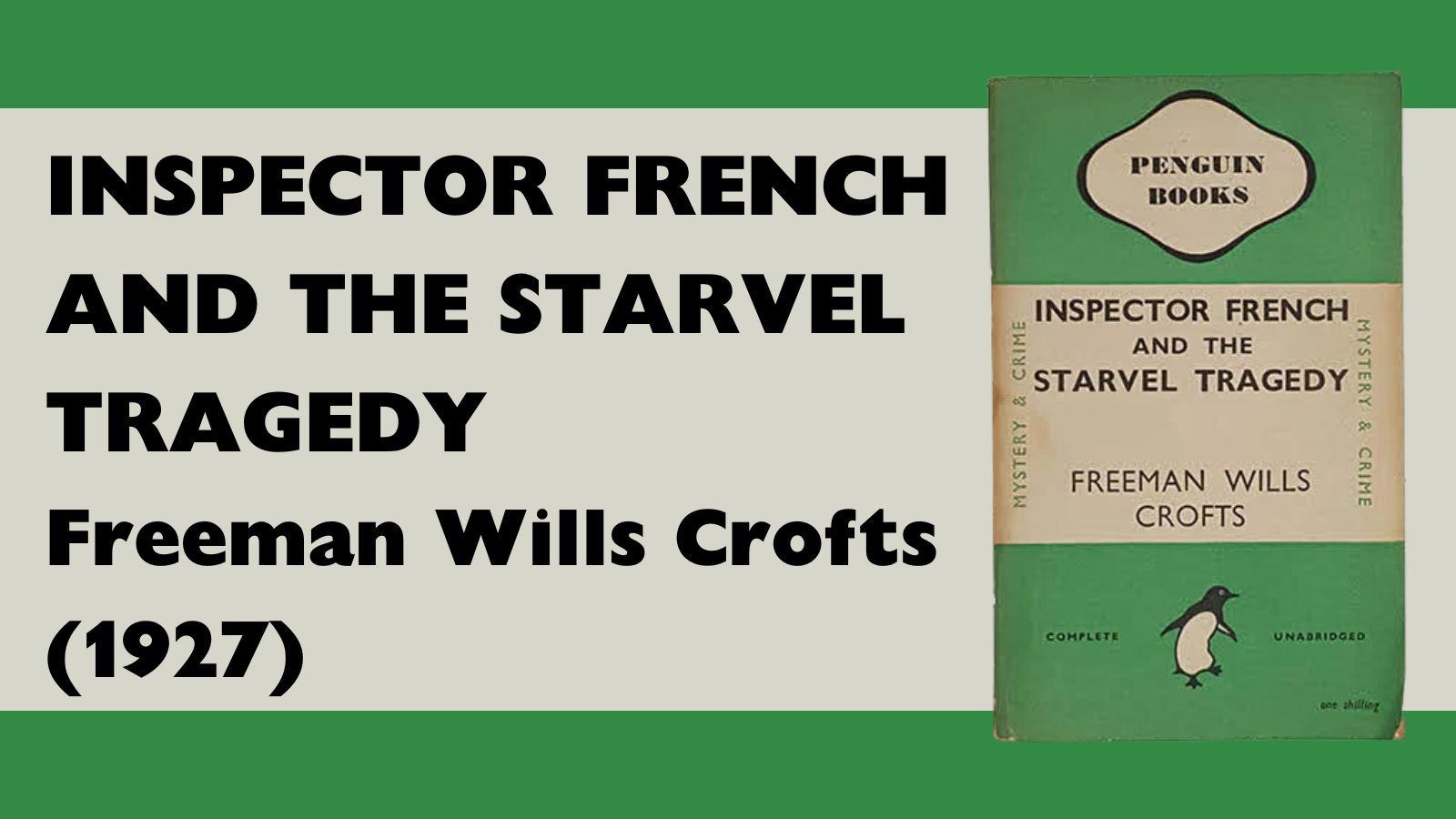
For his third case, Inspector French investigates a house fire on the Yorkshire moors, which claims the lives of three people. Initially labelled as a tragic accident, Scotland Yard’s suspicions are aroused by the circulation of some bank notes apparently taken from the house’s safe. French enters the scene, disguised as an insurance investigator. Through careful investigation, French uncovers evidence that this so-called accident is actually a case of murderous arson.
Julian Symons famously described Freeman Wills Crofts as a purveyor of “Humdrum” mysteries, alongside authors like John Rhode and JJ Connington. If Crofts was a less-gifted writer, his pedantic love of order and detail may have justly earned the “humdrum” label. But Crofts’ skill means Inspector French’s painstaking investigations are, in my view, far from tedious. The Starvel Tragedy is an excellent example of his artistry, where I found myself gripped by the detail and invested in French’s success. And even if (as you almost certainly will) you solve some things ahead of the Inspector, you can still marvel at the elegance of how everything fits together in the end.
I’ve now read 8 of Crofts’ 29 Inspector French novels, and I definitely intend to read the other 21. One of my other favourites is The 12:30 from Croydon (1934), which made it onto my list of Top 10 1930s mysteries. While we’re talking about the 1920s, I also thoroughly enjoyed his debut non-series novel The Cask (1920), which follows the adventure of a mysterious body in a cask. Yes, the titles may not be particularly imaginative, but the mysteries are great.
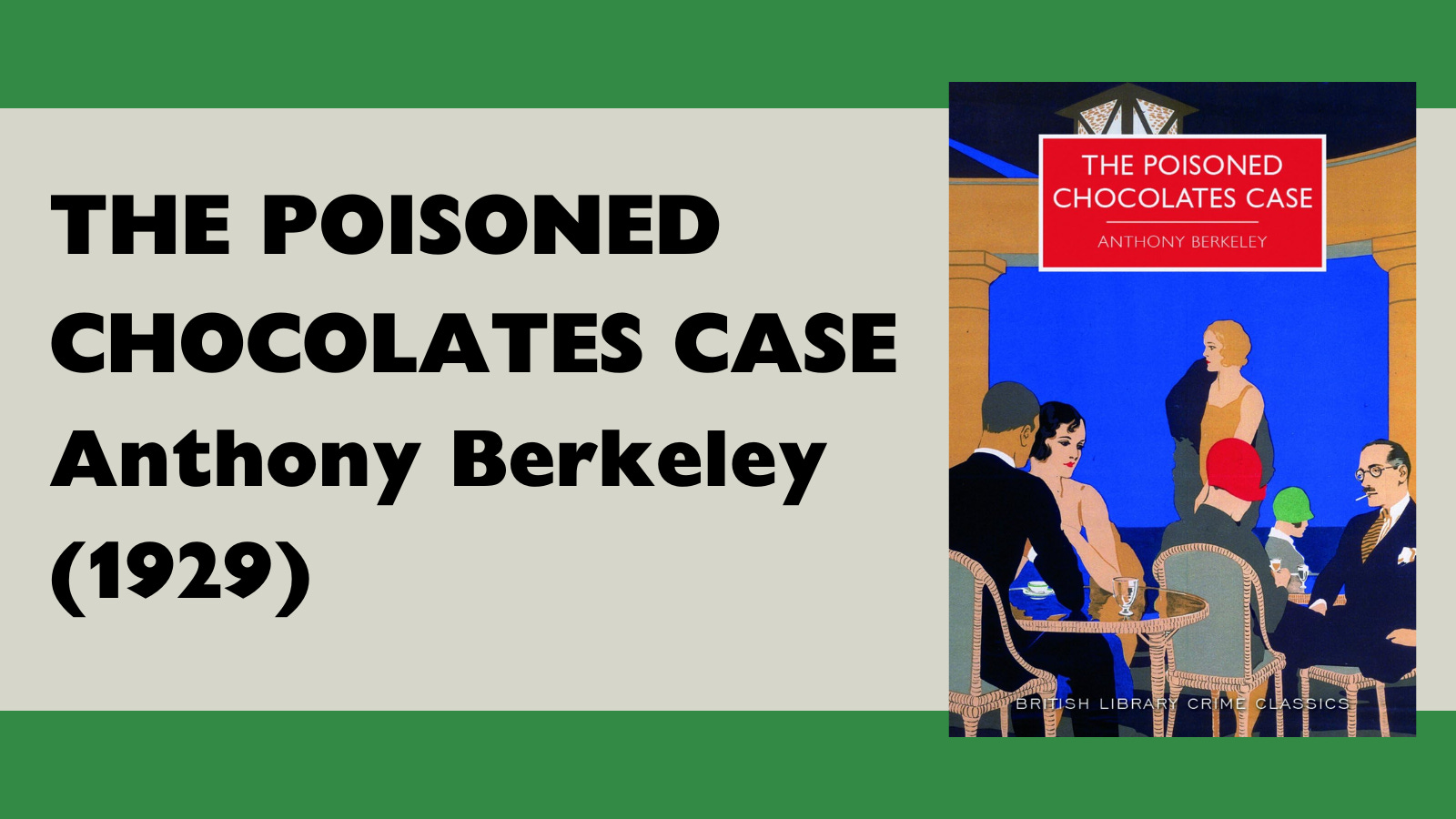
Anthony Berkeley has become one of my favourite Golden Age writers. Like many others, I was introduced to him through the British Library’s reprint of his 1929 classic The Poisoned Chocolates Case. Six amateur sleuths, including Berkeley’s main series character Roger Sheringham, meet to discuss the case of Joan Bendix. Joan is killed by some poisoned chocolates, brought home by her husband, who was given them by a fellow member of his club. It’s a puzzling mystery.
Berkeley, though, was not normally content with a straightforward mystery. He enjoyed playing games with the genre, and challenging conventions. The character of Roger Sheringham is himself an example of this, created as a fallible detective who often made incorrect deductions. With The Poisoned Chocolates Case, Berkeley took things a few steps further, as each of the six members of Sheringham’s “Crimes Circle” take turns proposing a solution to the mystery. Each solution, though, ends up being supplanted by the next, with each theory being more cunning and convincing than the last. And throughout, we are treated to Berkeley’s brilliant humour.
There are three other 1920s Berkeley novels that I would rate as five-out-of-five reads: Roger Sheringham and the Vane Mystery (1927), which makes very good use of the detective’s fallibility; Mr Priestley’s Problem (1927), a delightfully ludicrous farce; and The Silk Stocking Murders (1928), a book so good that Anthony Berkeley chose to dedicate it to himself. But if you’re new to the author, the best place to start is definitely The Poisoned Chocolates Case. One of my all-time favourite mysteries.
So, those are my Top 5 favourite novels from the 1920s. Are any of your favourites missing from the list? Do we have any similar tastes? Let me know in the comments!
Christopher' Smith’s entry for Milne in Twentieth-Century Crime & Mystery Writers (1991 edition, page 771) notes: “For some… it is almost a masterpiece, a classic of the traditional form which displays the greatest ingenuity.” But, “the alternative view is that Milne’s only detective story is rather irritating.”
In the aforementioned preface, he offers an explanation for not producing more: “The public appetite has changed once more; and it is obvious now that a new detective story, written in the face of this steady terrestial demand for children’s books, would be in the worst of taste.”
Quoted in Dennis Sanders and Len Lovallo’s Agatha Christie Companion (W.H. Allen, 1985), page 35.
A great list! I'm with you on loving Milne and Berkeley (and Christie, obviously). I haven't read much Crofts and none of Forester's crime novels. Adding to my list!
I've only read the Christie and Milne, but would agree with both!